


Interview : Tripti Dimri : I would love to portray Meena Kumari or Madhubala in a biopic someday!
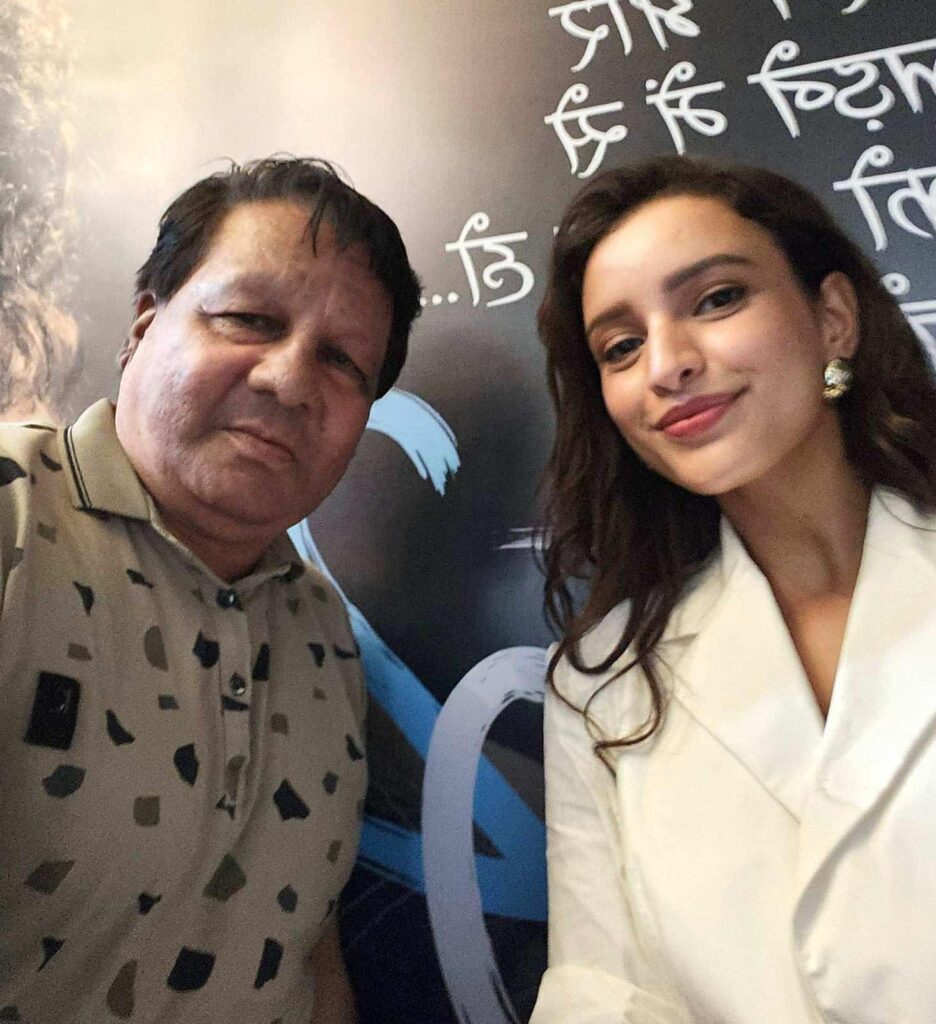 Tripti Dimri is a rising star in Indian cinema, known for her expressive eyes, subtle performances, and strong screen presence. She made her debut with Poster Boys but gained critical acclaim with her lead role in #LailaMajnu. Her breakthrough came with #Bulbbul, a Netflix original produced by Anushka Sharma, where she received widespread praise for her powerful and nuanced portrayal. Tripti impressed audiences once again with her role in #Qala, showcasing her versatility as an actor. She became a national sensation after her appearance in #Animal, where her chemistry with Ranbir Kapoor caught viewers’ attention. Known for choosing emotionally intense and layered characters, Tripti is ready with her next presentation, #Dhadak2. Our Sr Editor Keerti Kadam interacted with Tripti Dimri who freely spoke on various subjects.
How did the story of Dhadak 2 reach you?
I got a call from Karan Sir, who told me about a very interesting filmmaker, Shazia Iqbal, who had made a short film called Bebaak. He said it was a beautiful film and suggested I watch it if I hadn’t already. He also mentioned that she wanted to narrate a story to me and that I should meet her. I watched Bebaak, loved it, and then met Shazia and Rahul. The narration was fun and engaging, and even after it ended, we stayed back discussing the film and the character. I didn’t feel the need to say, “I’ll get back to you in two days.” It was an instinctive yes. Shazia had a strong vision as a director, and she proved it with this film.
What were your inputs into the character in terms of improvisation, intensity, and spontaneity?
It was a collaborative process, and every day on set felt unique. We would rehearse a scene once or twice, and then just play it out. A lot of spontaneous moments came from reacting to co-actors — and Siddhant is such a wonderful actor. His reactions often brought out something unplanned in me. Acting is all about reacting. Since we were working together daily, our expressions and emotions started coming naturally. I feel lucky to have worked with such brilliant co-actors. What also helped was that Shazia was open to inputs. She wasn’t rigid about how a scene should be delivered and welcomed new ideas, which gave us the freedom to express ourselves fully.
Would you be comfortable doing a negative role?
Absolutely! I’d love to do a role like Kajol Ma’am did in Gupt — she was phenomenal. But today, negative roles are not seen the way they used to be. Earlier, a villain was a completely separate character. Now, negative roles are more complex and layered. For instance, the actor playing the negative role in our film is actually very sweet and shy in real life — and that contrast is what makes it so impressive. I’d love to explore such roles. It would be a learning experience for me. I’m a huge admirer of Meena Kumari Ma’am and Madhubala Ma’am. I would love to portray Meena Kumari or Madhubala in a biopic someday.
What made you say yes to this role, and how did you prepare to match your chemistry with Siddhant?
As I said earlier, watching Shazia Ma’am’s short film made me realize she has a powerful voice. During the narration, I felt her deep desire to tell this story with honesty. It wasn’t about getting a big opportunity with Dharma Productions — she genuinely wanted to do justice to Vidhi, Nilesh, and the story itself. That sincerity inspired me. We did workshops together, but interestingly, we didn’t rehearse actual film scenes. Instead, we played games and spent time getting to know each other — just like college friends. We shared our struggles, weaknesses, likes, and dislikes. That built a strong comfort zone, so by the time we were on set, it felt like working with an old friend.
Since you’re playing a college student, did anything during the shoot remind you of your own college days?
Yes, definitely! Shooting in classrooms brought back so many memories. As you can see in the trailer, we were playing games like “Name, Place, Animal, Thing,” just like we used to in school and college. The energy on set felt just like a college gang. While there were serious scenes, behind the scenes, it was all fun and laughter.
What do you enjoy doing apart from acting?
I love to travel. Whenever I get a break, I explore new places. Traveling helps me learn about people and cultures — and as an actor, it’s very enriching. For instance, if you go to Uttarakhand, you notice how people live, eat, walk, sit, and take care of each other. It’s very different from the pace of life in Bombay or Delhi. You learn so much and even end up picking up interesting character traits from people.
Have you ever witnessed a Dhadak-like situation in your personal life, family, or neighborhood?
Not directly, but I’ve heard many such stories since childhood. We often assume that these things only happened in villages years ago, but that’s not true. They still happen — in cities, in educated households, sometimes subtly and sometimes in extreme ways. People may ignore it or normalize it, but for the person going through it, it’s very painful. Earlier, people wouldn’t attend inter-caste weddings, and it was accepted. Now, people are starting to question it, which is a good sign. It shows that change is coming, even if slowly.
Do you think films can bring about change in society?
Yes, films can definitely make a difference. They are a form of emotional education. But whether someone chooses to learn or change — that’s up to the individual. For example, someone might watch Bhaag Milkha Bhaag and feel motivated to start running (laughs), while another person may feel nothing. So it really depends. Films introduce us to new ideas, emotions, and perspectives — but what you take from it is your choice. There’s no pressure to change, only the opportunity to.
By Keerti Kadam