

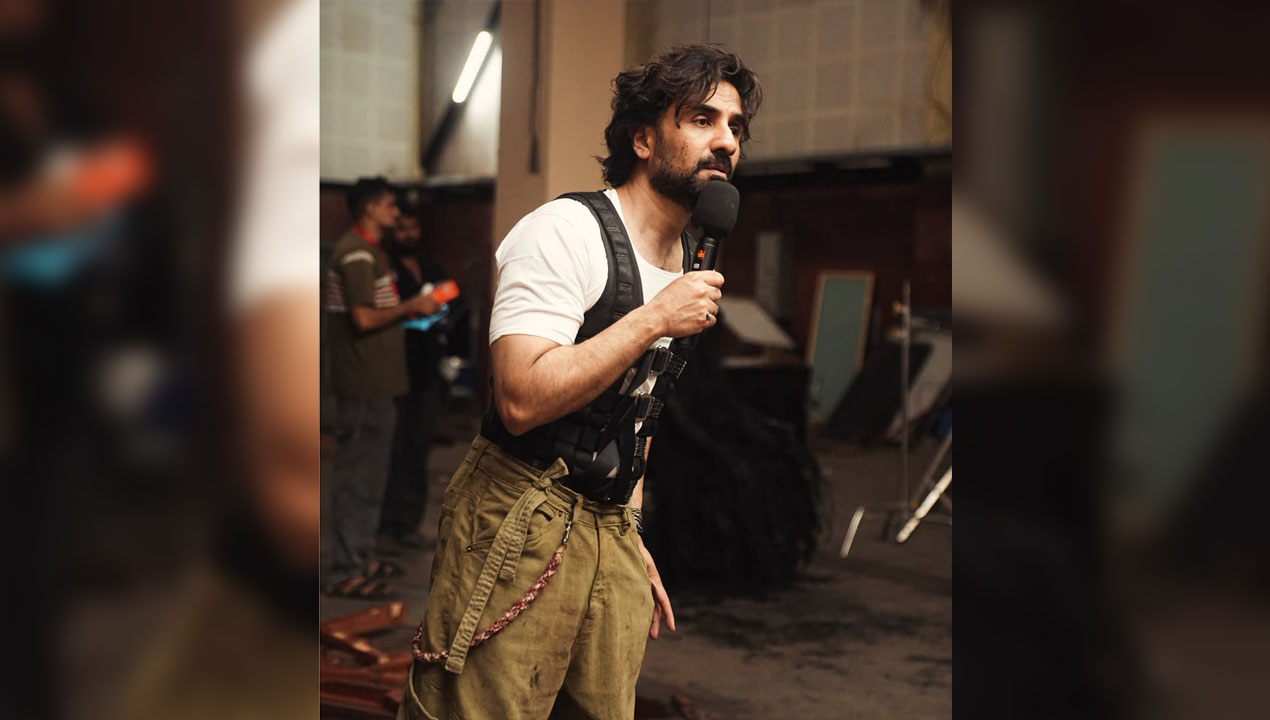
Vir Das Concludes Filming for His Second Directorial Feature ‘Baara Number’, a Found-Footage Psychological Thriller!
Vir Das has officially finished principal photography on his second directorial project, Baara Number, a found-footage psychological thriller that aims to deliver a fresh, gripping approach to cinematic storytelling. Stepping into multiple roles as director, producer, and cast member, Das further broadens his creative capabilities both behind and in front of the lens.
Co produced by Naresh Malik along with Jeff Lazarus and Kaushik Srinivasan from Third Frame Studio, Kavita Gupta and Vir Das’ Zazu Productions with Kavi Shastri as the creative producer on board, Baara Number brings together an accomplished ensemble cast featuring Sheeba Chaddha, Suhail Nayyar, Arunoday Singh, Ahsaas Channa, Atul Kulkarni, Niharika Lyra Dutt, Shriya Pilgaonkar, Puja Sarup, Navin Kaushik amongst others.
The film’s found-footage format forms an integral part of its storytelling, allowing the narrative to unfold through a deeply immersive visual language while exploring the psychological dimensions of its characters. The project marks an ambitious step for Das as he continues to explore stories and filmmaking styles beyond conventional formats.
Speaking about wrapping up the film, Vir Das said, “Baara Number has been an incredibly intense and rewarding experience for me because it challenged me in almost every way possible. Making a psychological thriller is already a very specific exercise in restraint, atmosphere and character, but choosing to tell it through the found-footage format added an entirely different layer to the process. You don’t have the luxury of conventional filmmaking language in the same way. The camera itself becomes part of the world, and the audience has to feel like they are discovering the story rather than simply watching it unfold. That was both exciting and terrifying. There were days when we were constantly questioning whether we were pushing the format enough, whether the performances felt organic enough, and whether the audience would feel that sense of unease and intimacy that the story demands.
What makes Baara Number particularly special to me is the ensemble we have put together. Every actor came into this project with such a strong understanding of their craft, but more importantly, they were willing to experiment. When you are working on a psychological thriller, especially one that relies so heavily on performance and atmosphere, you need actors who are willing to trust the material and embrace uncertainty. They did exactly that. As a producer, it has also been incredibly fulfilling to create a space where everyone could take those creative risks. Zazu Productions has always been about telling stories that feel different and giving filmmakers and performers the freedom to experiment, and Baara Number feels very much like an extension of that philosophy.
Wrapping the shoot is a strange feeling because after living with these characters and this world for so long, suddenly you have to let them go. But there is also a tremendous sense of excitement because now the film gets to find its final form in the edit and post-production. I think audiences are going to experience Baara Number in a way that is quite different from a conventional psychological thriller. We have tried to create something that feels immediate, unpredictable and deeply immersive, while still being driven by character. For me, this film represents another step in my journey as a filmmaker. My first film taught me so much about finding my voice behind the camera, and Baara Number has pushed me to question that voice, experiment with it and take it somewhere new. I can’t wait for audiences to see what we’ve created.”
With Baara Number, Vir Das continues to expand his filmmaking journey, taking on a challenging genre and an unconventional storytelling format while bringing together a strong ensemble of performers. The film is expected to offer audiences a tense and immersive psychological experience, with the found-footage approach placing them directly inside the unfolding narrative.
By Keerti Kadam