

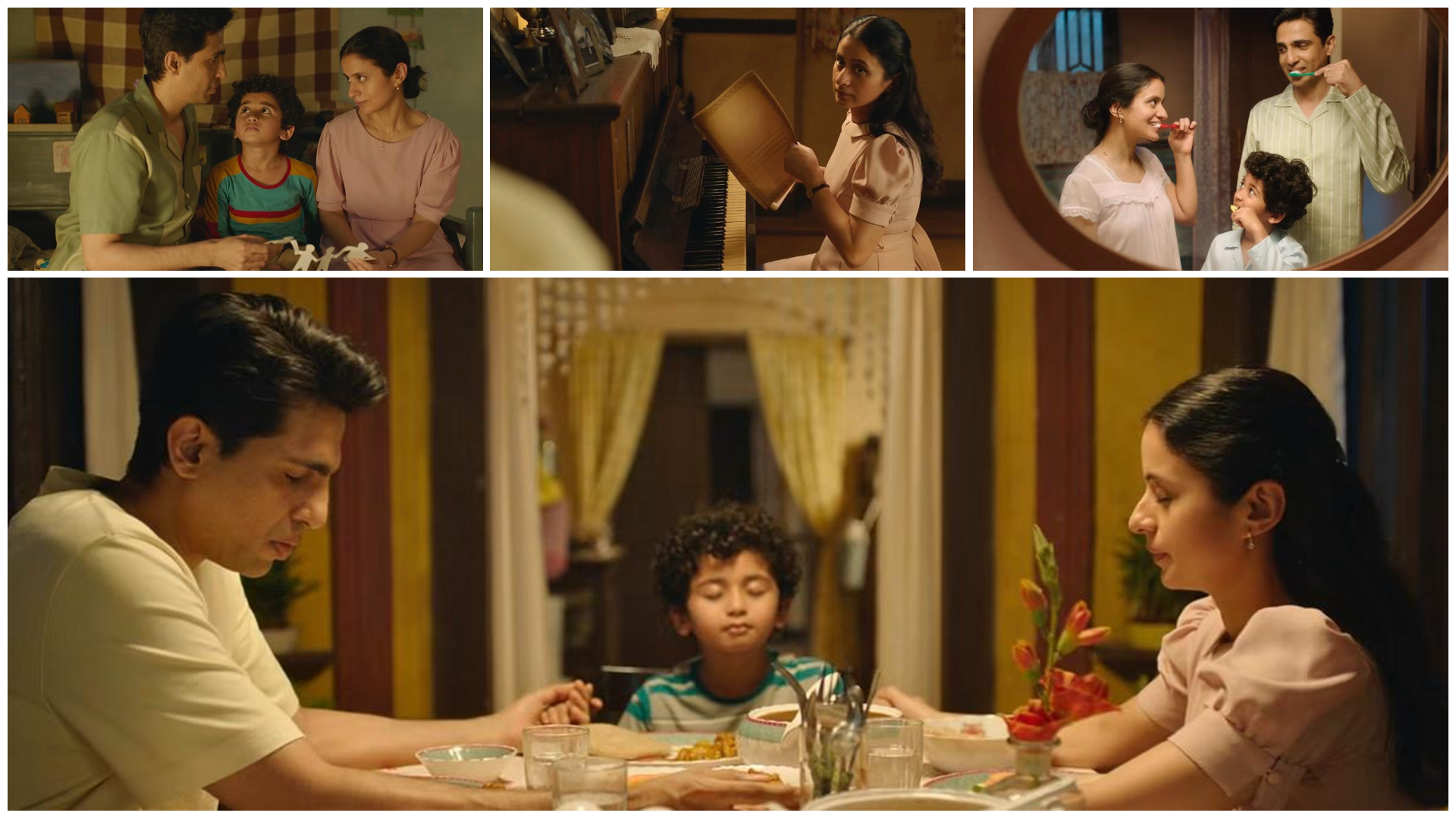
Rasika Dugal on the shrinking space for children’s cinema in India, ‘Little Thomas’ shows how a child’s perspective makes for a compelling story
Indian cinema has captured a vast spectrum of human emotions and experiences, yet stories centered around a child’s viewpoint have grown increasingly rare on the silver screen. Actor Rasika Dugal feels that a child’s world—filled with innocent questions, unfiltered observations, and infinite curiosity—makes for a deeply engaging subject in filmmaking. Her recent film Little Thomas, directed by #KaushalOza and backed by Anurag Kashyap, brings this unique perspective back into the spotlight.
Starring Gulshan Devaiah and Rasika Dugal, alongside young actor Hridansh Parekh, #LittleThomas is set in 1990s Goa and revolves around a young boy whose curiosity about life leads to a series of questions that the adults around him must navigate. Thomas wants a sibling and persistently asks his parents where babies come from. What begins as a child’s innocent wish gradually opens up a larger conversation about childhood, family, and the ways in which adults respond to questions they may not always know how to answer.
Playing Jessie Miranda, Rasika is part of a story that looks at family life through a child’s eyes. The film draws attention to how children perceive the world differently from adults, often approaching complicated subjects with a simplicity and honesty that can catch grown-ups off guard. Thomas’s questions are not merely a source of humour; they also invite audiences to reflect on how society deals with children’s natural curiosity and whether adults give them enough room to ask, explore and understand.
Speaking about the importance of children’s stories in Indian cinema and what makes Little Thomas special, Rasika Dugal says, “I think we have seen fewer films in Indian cinema that place a child’s world at the centre of the story. Children are often part of a larger narrative, but their own experiences, questions and ways of looking at life can be incredibly compelling in themselves. What I found particularly interesting about Little Thomas is how it explores all that a child’s mind can conjure up when the answers he gets from adults don’t quite add up for him. And it finds a lot of humour in the discomfort that Thomas’ seemingly simple questions create for the adults, as they struggle to find a child-friendly vocabulary… or any vocabulary to answer them. The film takes something as simple as a child’s wish for a sibling and his curiosity about where babies come from, and builds a story around it that also seamlessly and subtly explores the ups and downs of his parents’ relationship, while giving us a glimpse into a changing, post-liberalisation India.”
By Keerti Kadam