

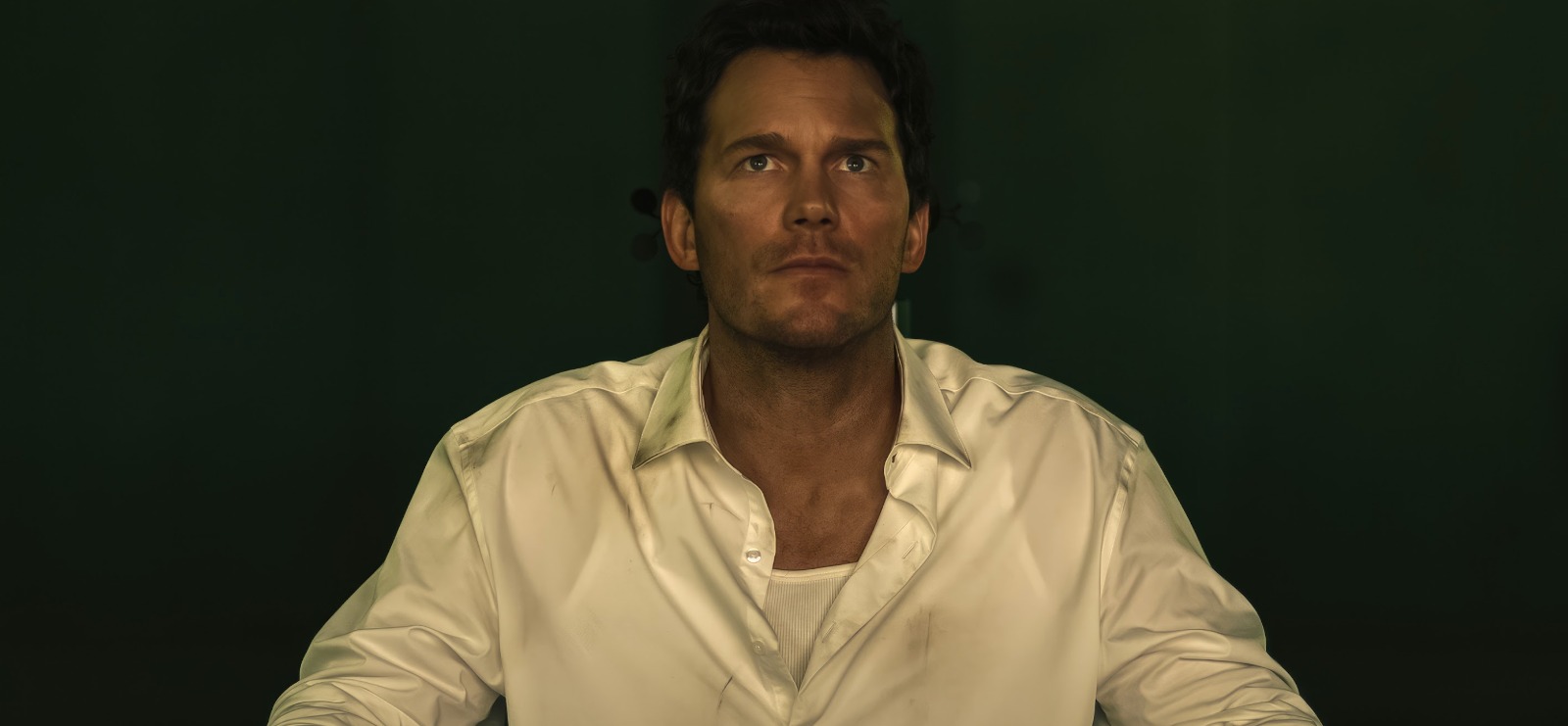
AI-thriller Mercy actors Chris Pratt and Rebecca Feguson reveal what it was like working with no real actors!
Performing without a physical co-star, reacting to voices instead of faces, and delivering emotions into a lens, this was the unusual reality for the actors of Mercy. The immersive virtual setup challenged not just their craft but the very rhythm of performance, pushing them into a space where imagination became as important as presence.
Unlike traditional sets where actors feed off of each other’s energy, Mercy required its performers to build emotional connections across distance and digital barriers. The process demanded intense focus, trust, and an ability to remain emotionally present, even when physically alone. It transformed the way scenes were played, making stillness, silence, and sound design as crucial as movement.
Chris Pratt reveals how disorienting and demanding the process was. “The film was also a challenge for our audio department, because when I’m in the Volume, I’m not working opposite real actors,” says Pratt. “I’m delivering lines into the camera, which is the perspective of Judge Maddox. Rebecca was in a different area on a microphone as I was getting her dialogue in my ear.”
For Rebecca Ferguson, this stillness became a strange kind of freedom. “As Maddox is physically still for most of the film and Chris is locked in a chair, it gave us freedom to do long takes,” says Ferguson. “It sometimes felt like we were doing a play, as we were often doing 40-minute takes. It allowed us to get lost in that world.”
In a space dominated by screens, microphones, and virtual landscapes, the actors had to find new ways to stay emotionally present. And in doing so, Mercy proves that even in the most technologically advanced setups, it is still the human connection that gives cinema its soul.
Sony Pictures Entertainment India releases Mercy in Indian theaters on January 23, 2026, in English and Hindi.
By Keerti Kadam