


Interview : Fatima Sana Shaikh : Love, for me, should be free of compromise!
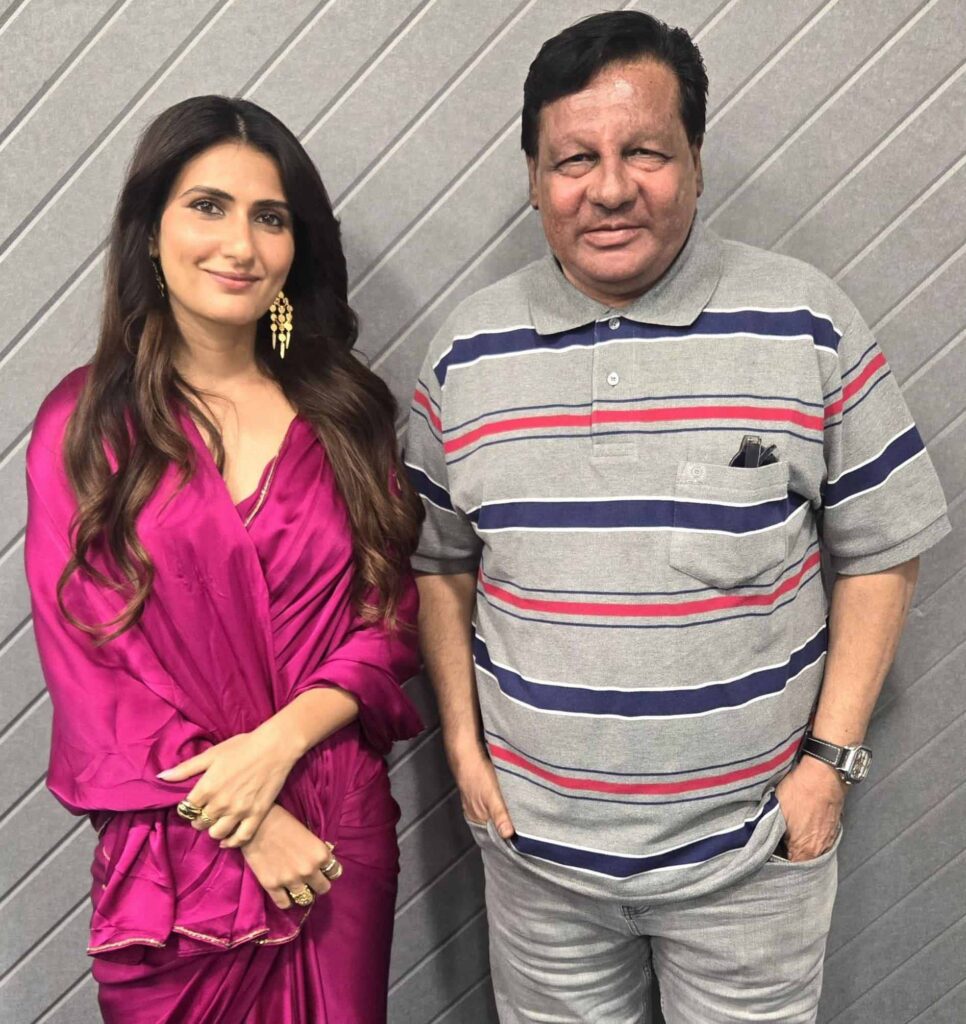 Fatima Sana Shaikh is a talented actress who began her career as a child artist in films like Chachi 420 and One 2 Ka 4. She rose to national fame with her powerful portrayal of wrestler Geeta Phogat in Aamir Khan’s #Dangal (2016), earning critical acclaim and mass recognition. Known for her versatility, Fatima has since explored a range of characters in films like Ludo, Suraj Pe Mangal Bhari, Ajeeb Daastaans, and Thar. She’s also appeared in OTT projects that showcase her depth as an actor. Fatima is often praised for choosing unconventional, emotionally layered roles that resonate with the audience. Her recent performances in Laal Saree further solidify her reputation as a performer with both charm and substance. With each project, she continues to evolve, balancing mainstream appeal with strong storytelling. Here she is seen intetacting with our Sr Editor Keerti Kadam as her new film #AapJaisaKoi is ready for release.
Fatima you’re appearing on both OTT and the big screen this month. Does that excite you or add pressure?
Fatima: Oh, I feel incredibly lucky! Aap Jaisa Koi marks my first proper love story, and I’m honestly more excited than pressured. Audiences today are craving something soft, tender, and emotionally real—we’ve all had our share of dark thrillers and heavy action. Even I don’t feel like watching them anymore. As for Metro, that’s Dada’s (Anurag Basu’s) canvas. His stories are nuanced, his characters unforgettable. He carries the weight of the film because his writing ensures every actor shines. He’s that rare kind of filmmaker whose actors are never told they underperformed—he simply brings out the best in us. And yes, his scripts are always ready… he just prefers to keep them a mystery!
Aap Jaisa Koi feels understated and intimate. Were there any challenges while working on it?
Fatima: Honestly, not at all. The script was written with such clarity and elegance that the challenges felt minimal. Vivek is a director who creates a peaceful space, even when making a romantic film. The set had a warm, calm energy—nothing chaotic. And working with Madhavan was so smooth—he’s as charming off-camera as he is on. You can sense the romantic vibe in the trailer itself; that serenity shaped the entire process.
This is your first time playing a Bengali woman and shooting in Kolkata. How was the experience?
Fatima: Oh, I adored every bit of it! It was my first visit to Kolkata, and the warmth of the people felt like home. I was fortunate to have Bengali actors around me—true cultural representatives who carried the body language and essence I wanted to capture. Bengali women have a certain sharpness, a salty elegance, and to bring that alive, I often turned to Ananya Chatterjee for insights. Vivek also painted Kolkata in a new light—not the usual red-saturated frames, but with subtlety and softness. I discovered the city in a way I hadn’t seen before.
Since the film explores love and relationships, what’s your personal view on love, breakups, and compromise?
Fatima: Love, for me, should be free of compromise. When you truly care for someone, you give without being asked—not out of obligation, but out of joy. Once compromise enters the conversation, the love starts to wither. I love deeply, passionately—so yes, I cry after breakups. But I believe in feeling everything. You can’t taste joy without first knowing sorrow, and it’s important to let those emotions flow through you.
Could you fall in love with someone older than you?
Fatima: Why not? Love doesn’t come with age restrictions. Even my parents had such a relationship—it’s entirely natural.
There’s a strong line in the trailer: “Aap kyun decide karoge meri limit.” Do you feel this film promotes feminism?
Fatima: More than feminism, the film promotes equality. It doesn’t pit genders against each other—it simply says we’re all human and deserving of the same respect. Women don’t want to be “better” than men; we want to be treated as equals. Physically we may differ, but emotionally, we’re just as strong—sometimes even stronger. The film doesn’t carry a loud message; it quietly echoes fairness and balance.
Your characters—be it Pinky in Ludo, Laal Saree, or Madhu in this film—always strike a chord. What did you take away from Madhu?
Fatima: Madhu gave me something I hadn’t experienced before—a deep sense of belonging. I come from a small nuclear family, so this was my first time portraying a woman surrounded by a big, loving family. We shot in Kolkata, and for the first time, I felt the warmth of constantly having people around you—sharing, laughing, supporting. In Mumbai, especially as an outsider, you often shift houses, don’t know your neighbours, and lack that support. Through Madhu, I experienced the joy of familial closeness, and it left a lasting impression on me.
By Keerti Kadam