

Interview : Pallavi Joshi coins a new phrase for her kind of cinema, “Truth Cinema”!
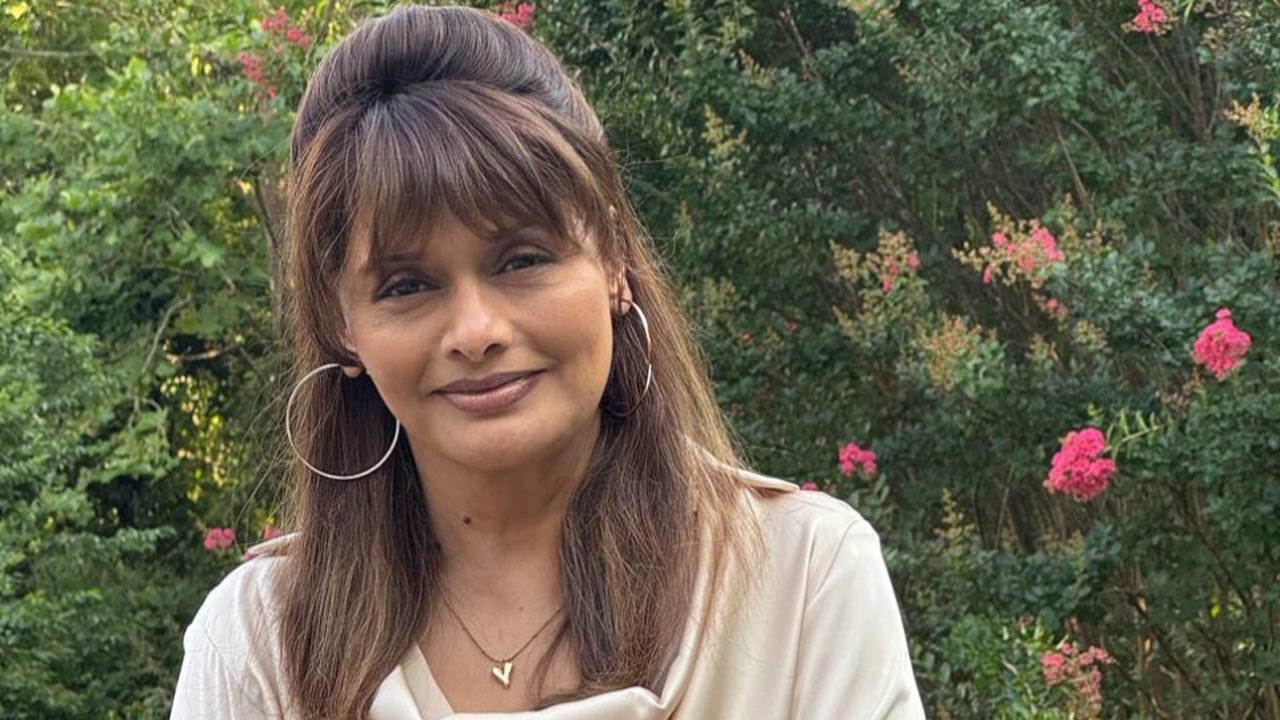
 National Award-winning actress and producer Pallavi Joshi is known for her uncompromising choices—whether it was her iconic roles in parallel cinema of the 1980s or her more recent work in hard-hitting films like The Kashmir Files. With the release of her latest project, she opens up about inspiration, research, controversies, and why she believes cinema must reclaim its role as a cultural textbook.
On facing release challenges: For Joshi, every release is a battle. “This film came with its share of challenges—we didn’t have the prints ready, subtitling and title changes were pending, and some VFX files weren’t complete,” she says with calm acceptance. These production hiccups, however, did little to shake her conviction in the film’s larger purpose.
The birth of “truth cinema”: Asked about the inspiration behind the film, Joshi reflects on simple conversations that sparked something bigger. “We would sit together and talk about how much we are losing as a country. At some point, we realized that if we don’t act now, what kind of world are we leaving for our children?” she says.
She recalls a time when Indian cinema reflected local culture—mothers cooking for their sons, families eating together, daughters-in-law learning traditions. “Gradually, cinema became more NRI-driven, with stories set in New York or London. With globalization, our traditions began fading. We asked ourselves—why did we fight for independence, if not to preserve our dignity and culture?” The answer led Joshi and her filmmaker-husband Vivek Agnihotri to coin a new genre: “truth cinema.”
On research as the backbone: Joshi and Vivek’s films are known for their extensive research. “We read hundreds of books, articles, and old newspapers, studied Time and Life magazines, and compared sources to identify factual commonalities—because without that, it becomes conspiracy,” she explains. Survivors’ accounts form the emotional core. “We interviewed people nearly 100 years old, some struggling with dementia, so we spoke with their children, went through old albums, and even used translators for Bengali accounts. These lived experiences are invaluable.”
Condensing reality for screen time is often necessary. “We sometimes merge multiple real stories into one character. That’s the only cinematic liberty we take.”
On controversies and criticism: Joshi doesn’t shy away from controversy. “The more controversy there is, the more people talk about the film, and the more people come to watch it. I prefer to see it positively,” she says matter-of-factly.
Parallel cinema, then and now: Reflecting on her early days, Joshi draws a parallel between the “art films” of Shyam Benegal, Govind Nihalani, and Mrinal Sen, and her current work. “Earlier, parallel cinema showed the harsh realities of poverty and oppression, while mainstream cinema gave escapist relief. Both were necessary. Today, audiences are more mature, and what we’re creating is a new kind of art cinema—‘truth cinema.’ Art should make you uncomfortable and force you to think. That’s its power.”
Cinema as a textbook: She strongly believes films like The Kashmir Files and her latest project should be treated as history lessons. “When you conceal too much, a distorted pattern emerges. Guru Dutt and Bimal Roy were our textbooks—they taught us about society. In the same way, our films can be modern textbooks, provided every detail is authentic.”
On acting breaks and comebacks: Addressing her absence from mainstream films, Joshi laughs, “After 2005, I didn’t act simply because no one called me!” Her eventual return was serendipitous. While casting for a role in Rita, director Rinku Shani suggested Joshi herself should play the part after failing to find a suitable actress. “I thought she was joking, but she was serious. That’s how I came back.”
The influence of books: A voracious reader, Joshi admits that literature indirectly shapes her worldview. “Earlier, I read fiction, but now mostly non-fiction. Books expose how much we live in illusions and image-building. For example, in How Prime Ministers Decide, I discovered Rajiv Gandhi was so much more than the public perception. He was a pilot, a friend, a reluctant politician. Reading shatters stereotypes.”
On politics and pressures
Do political subjects invite pressure? Joshi acknowledges the reality but maintains independence. “No party funds us. We make films because issues matter. When we made Buddha in a Traffic Jam, people accused us of supporting a party that wasn’t even in power then. We don’t work for politics; we work for truth.”
She adds, “India is unique. Despite invasions from Mughals, British, Portuguese, Mongols, we kept our culture alive. But we also carry 1,000 years of slavery that we often gloss over. We must confront it, not hide it.”
The idea of Bharat Maa: In her latest film, Joshi plays a symbolic role—Bharat Maa. “Everything else in the film is real, but Bharat Maa is imagination. Vivek once asked—what if we could visualize the nation itself? That’s how the idea was born. It’s not a real character, but an artistic representation of the soul of India.”
A quiet conviction:
Through it all, Joshi remains grounded. She continues to balance acting, music, reading, and research with ease. For her, cinema is not entertainment alone but the highest form of art—a textbook of truth.
By Keerti Kadam