

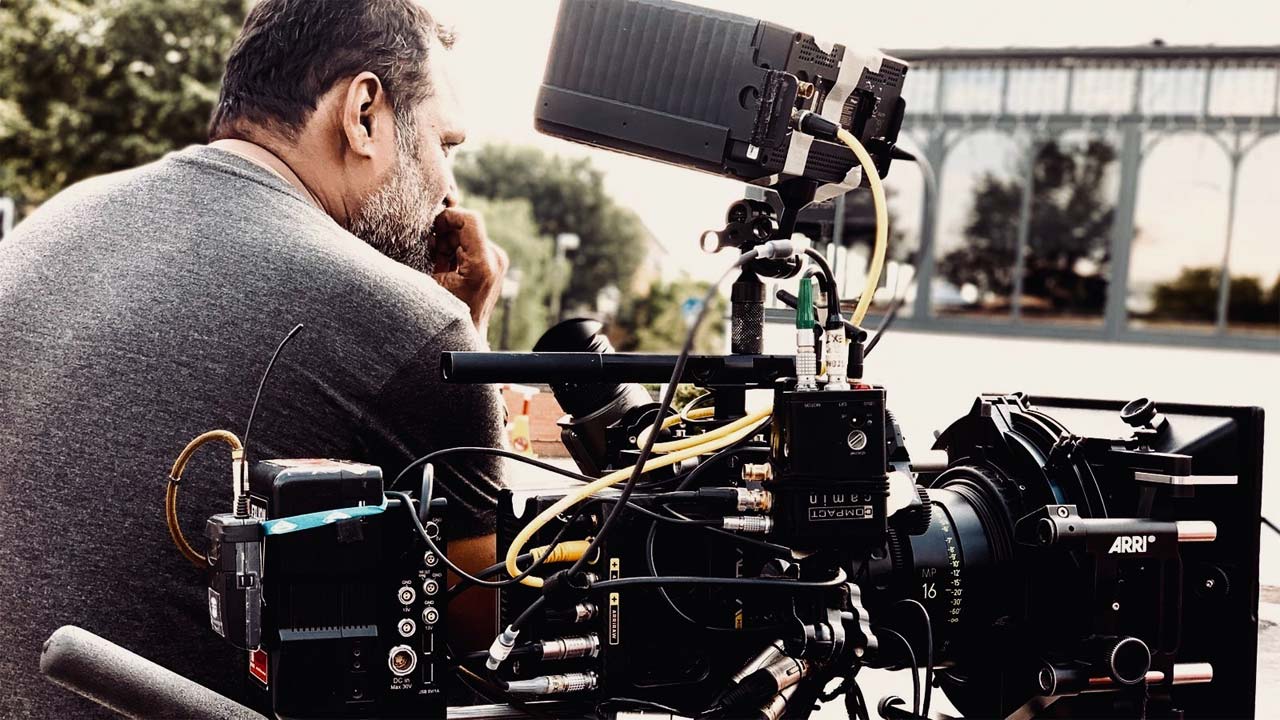
Sanjay Memane has been a defining visual voice of Marathi and Hindi storytelling!
For more than two decades, Sanjay Memane has been a defining visual voice of Marathi and Hindi storytelling, a cinematographer whose images have travelled from village single-screens and prime-time television into Oscar conversations, European festival juries and the living rooms of global streaming audiences. Today, he stands not as an emerging talent, but as an established coach and mentor figure whose craft and on-set leadership shape the look and discipline of an entire generation of Indian cinematographers.
Memane’s international visibility began building early in his career with Shwaas, the modestly budgeted Marathi feature that became India’s official entry to the Academy Awards for Best Foreign Language Film at the 77th Oscars, the first Marathi film ever selected in that category. The film not only won the National Film Award for Best Feature Film and the Maharashtra State Film Award, but was also widely described as a turning point that revived Marathi cinema, later releasing in Hindi, Bengali and Tamil-giving his imagery a reach across linguistic borders. Shot in just over a month across Pune, Sindhudurg, the Konkan region and KEM Hospital, Shwaas demonstrated Memane’s ability to deliver emotionally charged, naturalistic visuals on a demanding schedule, a discipline that has since become part of the training vocabulary he passes down to younger crews.
That international arc continued with Half Ticket, a tender story of two boys from Mumbai’s informal settlements, which became the first Marathi film to release theatrically in China after winning the Ecumenical Jury Award at the Zlin International Film Festival in the Czech Republic, one of the world’s oldest festivals dedicated to children’s and youth cinema. At Zlin, Memane’s work came under the scrutiny of a jury associated with organisations that also serve Cannes and Berlin, while at home the film earned the Zee Gaurav Award for Best Cinematography and multiple other honours, reinforcing that his images speak fluently to both European festival juries and Indian television audiences. When Half Ticket travelled to festivals and markets, it carried with it not only a new Marathi story but a visual language that international programmers recognised as world-class, a fact that has strengthened Memane’s reputation as a coach-level figure capable of setting standards that meet global expectations.
Memane’s portfolio moves with equal assurance between regional cinema and high-stakes national platforms. Lai Bhaari, another Marathi blockbuster that he shot, was honoured as Best Regional Film at the IIFA Awards, a ceremony staged in world capitals and beamed to millions of viewers across the Indian diaspora. That recognition placed his work on the same global stage as mainstream Hindi cinema, underscoring that his regional roots have never confined his reach. In recent years, his work on Chandramukhi has underlined how current his craft remains: the musical romantic drama was one of the most decorated Marathi releases of 2022 and among the year’s top-grossing films, with reviewers repeatedly praising its rich visual style, period detailing and song picturisation. Memane’s Best Cinematography award at the Fakt Marathi Cine Sanman-decided by a jury of senior industry practitioners in the inaugural edition of the awards signals that, even today, his peers regard him as a standard-setting figure at the very heart of contemporary Marathi cinema.
Television has been an equally powerful arena for Memane’s influence, where his work behind the camera has helped define the visual identity of Indian daily soaps at their peak TRP era and, in the process, shaped an entire school of television cinematography. From Kahaani Ghar Ghar Kii and Kyunki Saas Bhi Kabhi Bahu Thi to Balika Vadhu, Kasamh Se, Gulaal and Bade Achhe Lagte Hain, he has contributed to series that collectively span more than 7,000 episodes, including record-breaking ratings that once touched a staggering TRP of 40.8-figures that translate into near-national viewership. Industry awards such as multiple Indian Television Academy Awards for Best Videography acknowledge not just his technical polish but his leadership over large, rotating teams where he has long functioned as a de facto coach, training camera operators and assistants in the rigours of multi-camera work, fast turnarounds and emotionally coherent lighting.
His coaching role becomes even more pronounced in high-profile adaptation projects that demand a delicate balance between fidelity and localisation. On Sony Entertainment Television’s Sumit Sambhal Lega, the official Hindi remake of Everybody Loves Raymond, Memane had to reinterpret the visual grammar of an American classic for Indian family audiences, guiding his crew through the nuances of sitcom blocking, timing and performance-friendly lighting across 104 episodes. More recently, with Rudra: The Edge of Darkness the Disney+ Hotstar series adapted from the BBC’s Luther and produced with BBC Studios-he stepped into the new ecosystem of premium OTT drama, helping lead the visual translation of a globally acclaimed crime thriller into an Indian context. Rudra has gone on to win multiple honours, including recognition at the Dadasaheb Phalke International Film Festival and Talentrack awards, and set viewership records as one of Hotstar’s most-watched Hindi originals in non-Hindi languages, ensuring that his work is now embedded in the visual memory of streaming audiences across India and its diaspora.
What distinguishes Sanjay Memane in this landscape is not only the awards-National Film Awards, Maharashtra State Awards, IIFA honours, Zee Gaurav, Fakt Marathi and Indian Television Academy trophies-but the way he has channelled that success into a culture of shared knowledge on set. Assistants who have trained under him across films and television note the same constant: a coach-like presence that insists on discipline in framing and exposure, yet encourages each crew member to find an individual rhythm within the larger visual design. His sets function as open classrooms where the grammar of international cinema-be it festival aesthetics, Oscar-campaign discipline or BBC pacing gets translated into practical lessons on lens choice, camera movement and light continuity.
For young cinematographers in India and abroad, Memane’s journey offers a template: it is possible to build a career that begins in regional cinema, scales up to national television stardom and then expands into global festival circuits and streaming platforms, all while remaining deeply rooted in local stories. As Marathi cinema continues to claim its space in international markets and Indian series travel further on OTT platforms, his work stands as proof that images crafted in Kolhapur, Pune or Mumbai can resonate just as powerfully in Prague, Los Angeles or London. In that sense, Sanjay Memane today is more than a successful director of photography; he is an established coach of visual storytelling whose influence is already visiblein the work of the next generation, and whose recent accomplishments ensure that his frames continue to carry Indian narratives confidently onto the world stage.
By Keerti Kadam