

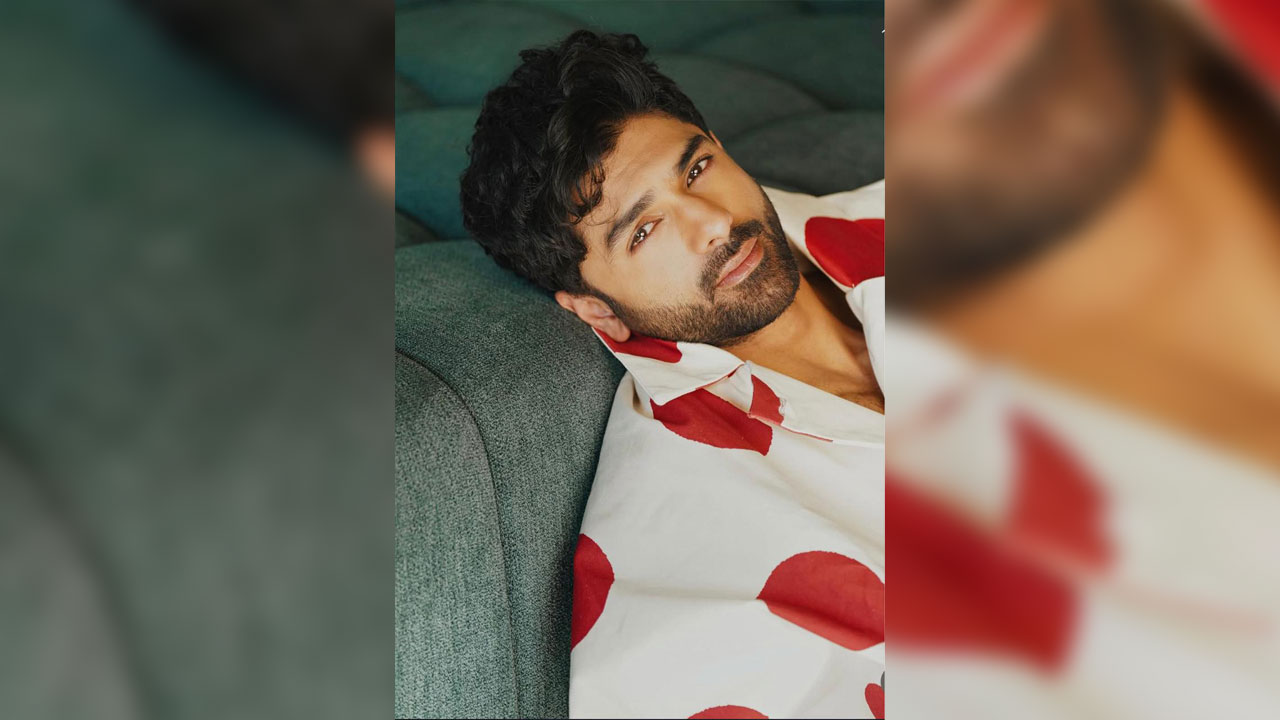
Taha Shah Badussha says, “Actors and creators who understand AI can use it to their advantage”!
As artificial intelligence continues to transform film-making, from visual effects to dubbing and CGI, conversations around its impact on actors have intensified. While many believe AI could eventually replicate nearly every aspect of performance, actor Taha Shah Badussha offers a grounded yet forward-looking perspective. For him, technology may enhance cinema, but it cannot replace the emotional truth that only a human performer can bring to the screen.
*“I don’t think AI can take over actors,”* Taha says thoughtfully. *“In intense or emotional scenes whether it’s with your mother, your wife, or your child the emotion has to come from us. That connection cannot simply be generated.”*
He acknowledges the remarkable strides AI has made. Films today are visually stunning, technically polished, and increasingly seamless. Yet, he feels there is still a subtle gap, saying “Sometimes you sense a slight disconnect maybe a jump in the edit, a lip-sync that feels just a bit off, or an emotional beat that doesn’t fully land. I’m sure in the near future, even those technical issues will be fixed. But the emotional connection between an actor and the audience is something deeper.”
For Taha, audiences relate to authenticity not perfection. “People connect to a human being, not just an image. They connect to vulnerability, to silence, to pauses that aren’t programmed. It’s in those gaps that creativity truly lives.”
He is realistic about the changing landscape. AI, he believes, will inevitably take over many technical aspects of filmmaking. He says, “AI will handle a lot of VFX, CG, and even dubbing. We have to understand that and adapt. Those who refuse to learn and evolve may struggle. But actors and creators who understand AI can use it to their advantage.”
Rather than viewing AI as a threat, Taha sees it as a tool, an extension of imagination. *“AI can only do what it’s programmed to do. But human beings aren’t programmed. And in that unpredictability in that silence lies creativity. That can never be taken away from us.”* He adds that AI also opens doors for filmmakers with limited budgets, offering greater freedom of vision and exploration. But even with limitless technology, he insists that emotional depth remains irreplaceable.
For Taha Shah Badussha, the future of cinema is not about humans versus machines, it is about collaboration. AI may redefine production processes and expand creative possibilities, but the heart of storytelling will always belong to human emotion. In a rapidly evolving industry, he believes the true power of cinema will continue to lie in its most timeless element: the ability of one human soul to move another.
By Keerti Kadam