


Interview: Akanksha Ranjan Kapoor: Persistence, patience and resilience are essential qualities for every actor, regardless of their background!
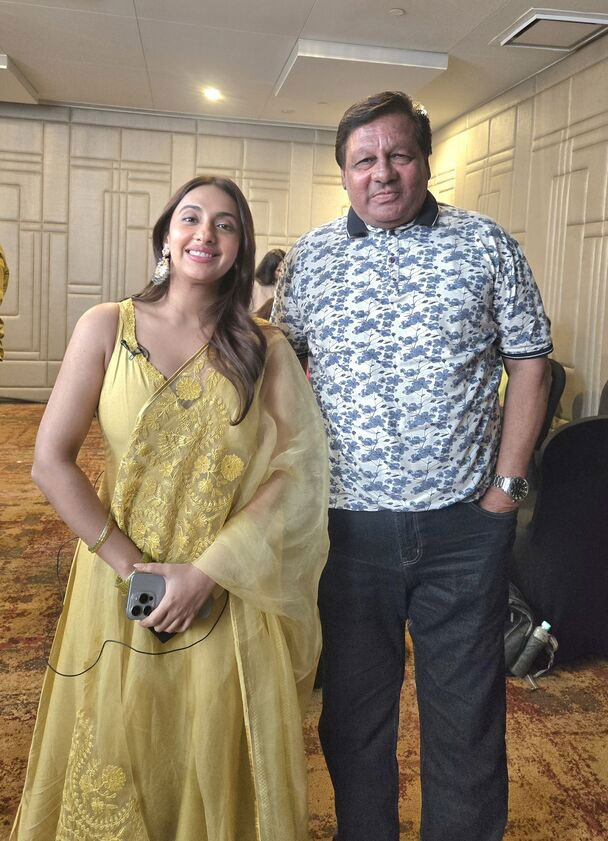 Actor Akanksha Ranjan Kapoor, daughter of filmmaker Shashi Ranjan and actress Anu Ranjan, comes from a well-known film family but has steadily carved her own identity in the entertainment industry. She made her acting debut with the Netflix film Guilty and went on to feature in projects such as Monica, O My Darling and Ray. She is now seen in the second season of TVF’s acclaimed series #GramChikitsalay, where she portrays a small-town character that showcases a completely different facet of her acting abilities. In an exclusive interaction, Akanksha speaks to our Sr Editor Keerti Kadam about various topics including her acting journey.
Q: Since Season 1 received an overwhelming response from audiences, did that increase the pressure while working on Season 2?
Akanksha:
To be honest, I think the success of Season 1 did the exact opposite. Instead of creating pressure, it boosted our confidence. We already knew that audiences had connected with and loved these characters, which gave us the freedom to explore their journeys in greater depth. The writers were also very attentive to the feedback received after the first season and worked on aspects that viewers wanted to see developed further. We genuinely enjoyed making this season, and I believe audiences will have an equally enjoyable experience watching it.
Q: Did you have a feeling that the show would become such a success?
Akanksha:
Whenever I choose to be part of a project, it is because I truly believe in it. If I do not connect with a script, I simply do not take it up. The fact that TVF was backing the project gave me a great deal of confidence from the outset. Once I read the script and understood the world the creators were building, I felt there was something unique and special about it. Of course, no one can accurately predict how a show will perform, but I certainly had a positive feeling about it from the very beginning.
Q: As someone who is often perceived as an insider, do you think your journey in the industry was easier than that of outsiders?
Akanksha:
Honestly, I do not think the insider-outsider debate makes a significant difference for the vast majority of actors. Perhaps a very small percentage may have certain advantages, but for most actors, the journey is remarkably similar. Everyone has to audition, face rejection, wait for opportunities and continuously prove themselves. I began auditioning when I was nineteen years old and received my first major break only in 2019. Before that, I worked in public relations, took up influencer assignments and continued auditioning consistently. Persistence, patience and resilience are essential qualities for every actor, regardless of their background.
Q: Why did you choose films and OTT platforms over television?
Akanksha:
It was never about choosing one medium over another. What mattered to me was the kind of characters I wanted to portray. At that point in time, I was particularly interested in playing strong, contemporary urban women, and I found more such opportunities in films and digital content. The roles I admired and aspired to perform were largely being written for films, so my journey naturally gravitated in that direction.
Q: Do you feel television content was more progressive in the past?
Akanksha:
Absolutely. In fact, I would say it was far more progressive. Shows such as Saans and Kadam featured layered, nuanced and compelling storytelling. As a child, I watched those programmes and often thought how wonderful it would be to portray characters like those someday. Unfortunately, television storytelling gradually evolved in a different direction, and many of those complexities and subtleties became less common.
 Q: Do you enjoy portraying small-town characters more, or do you prefer urban roles?
Akanksha:
For me, satisfaction comes from the quality of the character rather than the setting. Whether a character belongs to a village or a metropolitan city is secondary. What truly matters is the character’s emotional journey, motivations, aspirations and conflicts. That said, Gram Chikitsalay was particularly fulfilling because it gave me an opportunity to portray a small-town character convincingly, something that many people may not have expected from me.
Q: During the shoot, you had an interesting experience at a rural hospital. Could you tell us about it?
Akanksha:
Yes, certainly. While we were filming in Balaghat, I had to take a series of rabies injections, which required multiple visits to a local hospital. Initially, I was a little apprehensive because I did not know what to expect. However, I was pleasantly surprised by the experience. The hospital was clean, well-organised and efficiently managed. The doctors and nursing staff were professional, courteous and highly competent. The experience challenged many of my preconceived notions and left me feeling optimistic about the quality of healthcare available in smaller towns.
Q: Based on your experience, do you believe healthcare facilities in rural India are improving?
Akanksha:
From what I personally witnessed, I would certainly say yes. While there is always scope for further improvement, I was genuinely impressed by the facilities and systems I observed in Balaghat. It was encouraging to see the progress that has been made, and I sincerely hope that similar improvements continue to reach more regions across the country in the years to come.
By Keerti Kadam