

Interview: Amit Sadh: “If you get an opportunity to stand in front of the camera and work with good actors, you should be grateful, thank the Almighty and keep moving forward!”
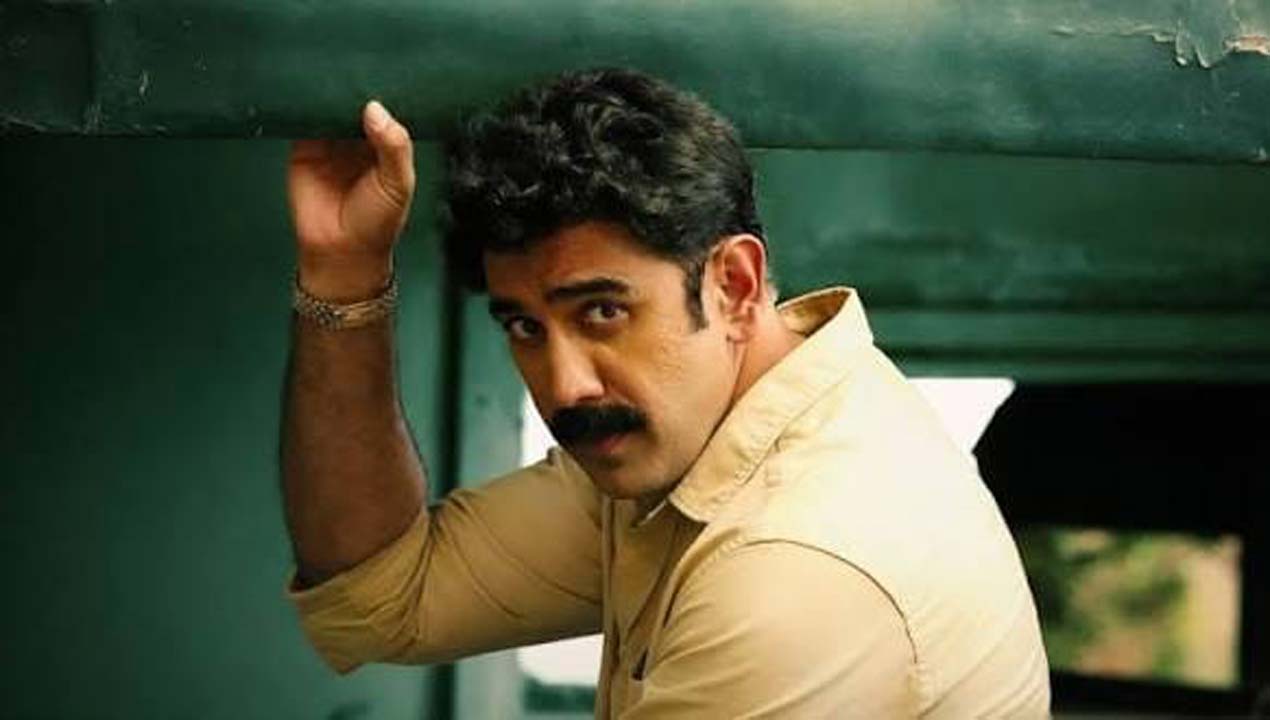
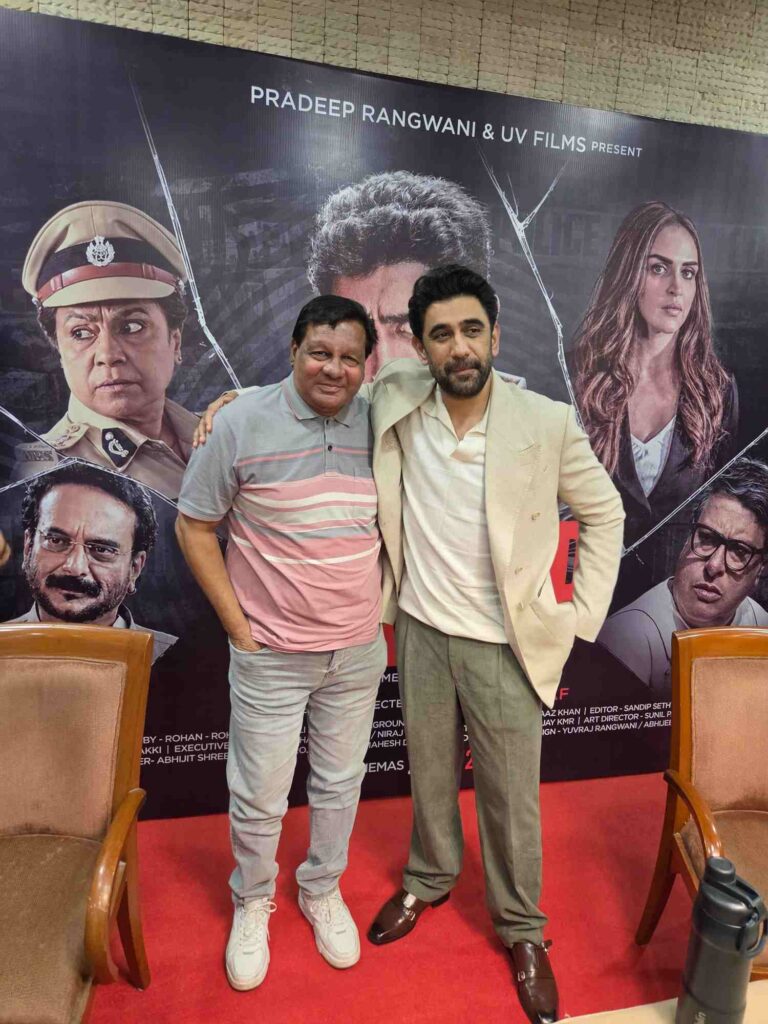 Amit Sadh made his acting debut in 2002 with the television show Kyun Hota Hai Pyarrr and rose to prominence with the critically acclaimed film Kai Po Che! He subsequently showcased his versatility in films such as Guddu Rangeela, Sarkar 3, Akira, Sultan, Gold, Super 30 and Shakuntala Devi. On the digital front, he earned considerable appreciation for his performances in web series like Avrodh: The Siege Within, Breathe: Into the Shadows, Jeet Ki Zid, Duranga and Mukhbir. Known for bringing a distinct identity to every character he portrays, Amit will next be seen as encounter specialist Pratap Rana in the upcoming film Pratap In an exclusive conversation with CineBuster’s Sr Editor Keerti Kadam, Amit Sadh opens up about his acting journey, his approach towards choosing diverse roles, his experiences working with co-stars, the preparation involved in portraying an encounter specialist and several interesting aspects of Pratap.
CineBuster: What made you sign Pratap, and how did the film come your way?
Amit Sadh: I have always enjoyed reading scripts. Whenever a story or a character appeals to me, I naturally become curious to explore it further and understand what makes it special. Sachinji contacted me regarding Pratap and initially shared some information about the project. I requested him to send me the screenplay so that I could read it. I was not in Mumbai at the time, but he sent it across. The moment I received it, I started reading, and interestingly, I finished it in a very short time.
I was genuinely impressed by the story. The very next morning, I called Sachinji and told him, “Sir, this is a wonderful script. I really like the project. Let’s meet and discuss it in detail.” We subsequently met and discussed the concept, the narrative, my character and the director’s vision at length. The screenplay made a strong impression on me during the very first reading, so my decision to associate with Pratap came quite naturally.
CineBuster: You have portrayed several characters in uniform, including police officers and members of the armed forces. How do you ensure that each character has its own distinct identity?
Amit Sadh: I have played several characters in uniform, although not all of them have been police officers. Some have been associated with the armed forces, specialised security units and the military. In Avrodh, I portrayed Major Tango in a story based on the Uri attack. For that character, I had to work on a specific physical appearance and body language. In Jeet Ki Zid, I played Major Deep Singh Senger, who served with Para 21 during the Kargil War. He was shot five times in enemy territory and subsequently became paralysed. The story beautifully portrayed his struggle to learn to walk again, along with the emotional journey he shared with his wife. It was also a beautiful love story.
What I particularly liked about Pratap was that it is not merely the story of a man’s achievements, duties or bravery. It also explores the impact that such demanding professions have on the families of those who serve. While working on Jeet Ki Zid, I had a conversation with Major Deep Singh, during which he shared something very beautiful. He said, “I am the Army, and the wife standing behind me is also the Army. This is the story of an army standing behind another army.” That thought stayed with me.
When a police officer or a soldier remains away from home for ten days, his wife has to take care of the children, manage the household and deal with her own emotional uncertainties. Even when her husband returns, she often has to put aside her worries and provide him with the emotional strength he needs. His duty is towards the nation, and she understands that. The contribution of such women is equally significant.
In Kabir Singh, I played a police officer associated with the Crime Branch. His responsibility was to understand the criminal’s psychology and prevent him from committing further offences. However, the police officer in Pratap has a completely different approach. His belief is that anyone who commits a crime must face strict consequences. Every investigative agency, whether it is the CBI, ED or the police, functions differently. Therefore, the approach, personality and body language of every character have to be distinct.
CineBuster: Did you undergo any special preparation to portray Pratap Rana, an encounter specialist?
Amit Sadh: (Laughs) Yes, I went there one day, eliminated four or five people and then got ready for the shoot! Jokes apart, the most important preparation for me is understanding the screenplay. A writer and director may spend two or three years researching a subject before developing a story. It is therefore essential for an actor to understand the vision they are trying to communicate.
Once you understand that vision, you can discuss your thoughts and suggestions with the director. If you feel that a particular scene can be performed differently or approached from another perspective, you can always discuss it. Filmmaking is a collective effort, and everyone contributes towards making the final product better. However, I would particularly credit the director for the work done on this film.
CineBuster: How was your experience of working with Esha Deol for the first time?
Amit Sadh: I have always admired Esha as an actress, but I also have tremendous respect and admiration for her as a person. Rather than calling myself her fan, I would say I am an admirer of her work. Yuva is one of my favourite films, and she also made a distinct impression in Dhoom. There is an openness and naturalness about her personality, along with a certain grace and elegance.
I had formed an impression of her through her interviews and performances. However, when I met her personally, I realised that she was ten times better than I had imagined. Her greatest quality is her honesty towards herself. She says exactly what she feels. She does not frame her answers according to what people might like to hear or what sounds pleasing. She accepts the truth of her life with tremendous dignity and positivity. That is a quality I would love to imbibe in myself as well.
I consider myself fortunate to have had the opportunity to work with her. I genuinely feel that she is the heart of this film. Every man’s life has the support of a woman in some form, whether she is his mother, sister, wife or co-star. God has given women a unique strength. I consider Esha a good omen in my life.
CineBuster: Did you grow up in an environment that emphasised discipline, much like the military?
Amit Sadh: Yes, discipline was given great importance in our household. During my childhood, the discipline imposed by my parents and grandparents, their scolding and their constant guidance sometimes felt frustrating. However, today, I sincerely thank them for those values and lessons.
They taught me to respect elders, treat women with dignity and protect younger children. These are some of the values that were instilled in me from a very young age, and I am grateful for that upbringing.
CineBuster: How do you maintain your mental well-being and inner peace?
Amit Sadh: I am deeply connected with nature. Whenever I feel mentally disturbed or overwhelmed, I simply head towards the mountains. I take my motorcycle and travel towards the Himalayan ranges, including Trishul and Panchachuli. Looking at those magnificent mountains gives me a completely different kind of energy.
I bow my head in reverence, sit beside a river with my hands and feet immersed in its cold water, and spend a couple of days in a tent. After that, I return feeling refreshed and rejuvenated. Spending time in the lap of nature helps me release all the stress and negativity from my mind.
CineBuster: You have portrayed an intense, strong-willed character like Pratap Rana, often associated with the image of an ‘Angry Young Man’. How do you control your anger in real life?
Amit Sadh: First of all, I would like to thank the media for referring to me as an ‘Angry Young Man’. It is a significant title in the film industry. However, I do not look at this character merely as an ‘Angry Young Man’. I am portraying an individual with a particular mindset and temperament. To become an encounter specialist, a person needs a certain level of confidence, courage and fearlessness. His body language and mannerisms naturally reflect those qualities.
As far as my personal life is concerned, I have worked extensively on controlling my anger. I was a very short-tempered person during my childhood. However, today, I can proudly say that there is very little room for anger in my life. Meditation, nature, good mentors, the right teachers, books and the wonderful people I have encountered along the way have taught me a great deal.
When I was young, my parents would often tell me, “Learn to ignore things.” At that time, it sounded like a very simple piece of advice. Today, however, I feel that the art of ignoring things is a subject worthy of a PhD! You do not need to react to everything that happens around you. I have learnt not to allow external circumstances to affect me unnecessarily. See good things, listen to good things, speak positively and maintain an optimistic outlook. When you do that, anger hardly gets an opportunity to enter your mind.
CineBuster: You have had the opportunity to portray a wide variety of characters, from Kai Po Che! to films like Sultan and Gold. How do you look back at this journey? Was there any particular role that changed the way people perceived you?
Amit Sadh: Honestly, I do not think about it too much. One film ends, and another begins. If I start wondering how all of this has happened and whose blessings have made it possible, I can only think of my parents’ blessings, the love of the audience, the support of the film industry and the grace of God.
From Kai Po Che! to where I am today, I never imagined even in my wildest dreams that I would receive so many wonderful opportunities. There are millions of people who come to Mumbai with dreams of becoming actors. Many of them are extremely talented, but not everyone gets an opportunity.
Therefore, even if you get an opportunity to deliver just one dialogue in a film, you should consider yourself fortunate. If you get an opportunity to stand in front of the camera and work with good actors, you should be grateful, thank the Almighty and keep moving forward. That is how I look at my journey.
CineBuster: In Pratap, your character finds himself behind bars. What kind of emotions does he experience during this phase? The song ‘Main Wapas Aaunga’ also offers a glimpse into his family life.
Amit Sadh: The song ‘Main Wapas Aaunga’ beautifully captures how much Pratap misses his wife, son and family. It explores the emotional bond between Esha’s character, Poonam, and my character, Pratap.
Interestingly, a man who has spent his life sending others to prison now finds himself behind bars. Naturally, several emotional and psychological conflicts begin to surface. He longs to get out, struggles to come to terms with the fact that his life has changed completely and has to deal with the behaviour of other inmates, many of whom are criminals. All these circumstances take a toll on him.
The changes that take place within Pratap, both emotionally and psychologically, as he navigates this difficult phase of his life, are something audiences will get to witness in the film.
By Keerti Kadam