


Interview: Manoj Bajpayee: Maintaining Individuality From One Project To Another Keeps Me Motivated!
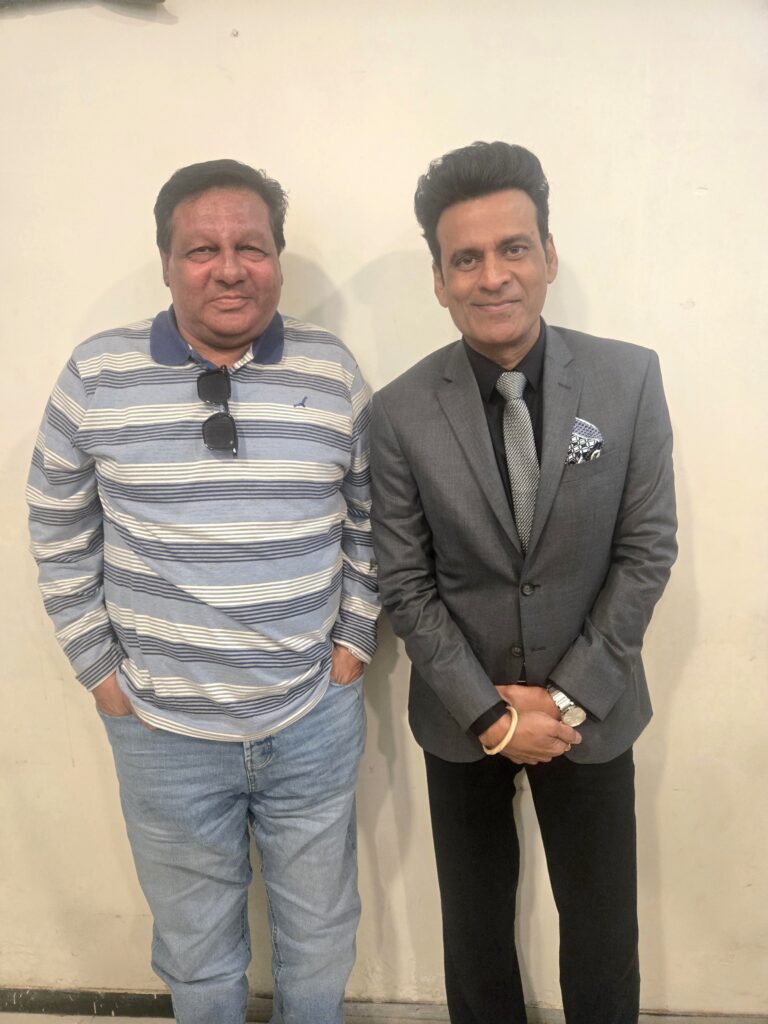 Known for bringing some of Indian cinema’s most memorable characters to life, Manoj Bajpayee has carved a niche for himself through performances that combine intensity, authenticity, and depth. From his breakthrough portrayal of Bhiku Mhatre in Satya to acclaimed roles in films such as Bandit Queen, Shool, Raajneeti, Gangs of Wasseypur, Aligarh, and Bhonsle, as well as the hugely popular series The Family Man, Bajpayee has consistently challenged conventions with his choice of roles. A recipient of multiple prestigious honours, including National Film Awards, the versatile actor remains humble, outspoken, and deeply devoted to his craft. In an exclusive conversation with our Senior Editor Keerti Kadam, Manoj Bajpayee discusses his latest film Governor, the process of portraying former RBI Governor S. Venkitaramanan, working with actor-director Chinmay Mandlekar, and his unwavering commitment to meaningful storytelling.
CB: In Governor, you portray S. Venkitaramanan, the bureaucrat who played a pivotal role in transferring India’s gold reserves overseas during the 1991 economic crisis. How difficult do you think that decision must have been for him?
MB: I would call it an act of courage rather than merely a bold decision. He understood that the country had reached a point where conventional solutions were no longer enough. When a nation is faced with a severe financial emergency, extraordinary measures become unavoidable. The logic behind his decision was quite straightforward. Just as an individual relies on savings during difficult times, he believed the country should use its most valuable assets to survive a crisis.
Naturally, such a move was not easy to accept. While political leaders may have recognised its necessity, pledging national assets to secure financial relief was emotionally and politically challenging. Families part with their most cherished possessions only when they have exhausted all alternatives. In the same way, Venkitaramanan applied a deeply human principle on a national scale.
What makes his achievement remarkable is that he managed to persuade policymakers despite the prevailing political uncertainty. He enjoyed the confidence of leaders like Rajiv Gandhi and economists such as Dr. Manmohan Singh. Executing such a sensitive operation discreetly and helping pull India back from the brink of a financial collapse was an extraordinary accomplishment.
CB: Audiences have appreciated how convincingly you have captured his speech patterns and personality. How did you approach that aspect of the role?
MB: It demanded extensive preparation. Since the film is intended for a Hindi-speaking audience, accessibility was important. At the same time, the character came from a distinct cultural and linguistic background, which had to be reflected authentically.
The challenge was to preserve the flavour of his roots without making the character difficult for audiences to connect with. Furthermore, Venkitaramanan was an accomplished IAS officer. He was highly educated and articulate, so it would have been inaccurate to portray him as uncomfortable in Hindi or English. I therefore incorporated subtle regional influences while ensuring his sophistication remained evident. Thankfully, viewers seem to have connected with the portrayal, and the positive response has been reassuring.
CB: Apart from language and mannerisms, what other preparations went into building the character?
MB: Character creation is never an overnight process. It develops gradually through continuous research and observation. You keep reading, gathering information, discussing ideas with the director, and studying every available reference.
Since my academic background is in History and not Economics, I had to invest time in understanding the economic environment of that period. I familiarised myself with concepts such as GDP, fiscal deficits, and balance-of-payments issues because they were central to the story.
At the same time, I tried to understand the man behind the title. How did he behave? What influenced his posture, gestures, and overall presence? Body language often reveals a person’s inner world. Combining factual research with emotional understanding is what ultimately shapes a convincing performance. By the time all these elements come together, the transformation into the character has already begun.
CB: Have you ever felt the burden of carrying an entire film as its central performer?
MB: The only burden I willingly carry is the responsibility of delivering an honest performance. That pressure never goes away. My focus is always on ensuring that every character feels genuine and distinct.
I have never wanted audiences to see repetitions of my previous work. Each role should have its own identity, its own voice, and its own emotional landscape. Maintaining that individuality from one project to another is the challenge that keeps me motivated.
CB: Earlier, you were speaking about Chinmay Mandlekar. As an actor himself, does that give him an advantage as a director?
MB: Absolutely. It makes a tremendous difference. Whenever I encounter difficulties during a scene, Chinmay immediately understands what I am going through because he has experienced similar situations himself.
Acting is often misunderstood by those watching from the outside. It is similar to spectators analysing a cricket match from the stands without realising how quickly a fast bowler delivers the ball. Only the player on the field truly understands the challenge.
Likewise, only an actor can fully appreciate the emotional and technical complexities involved in performing before a camera. Chinmay recognises those challenges instinctively and knows how to guide actors through them. That understanding made our collaboration on Governor extremely rewarding, just as it did when we worked together on Inspector Zende. His sensitivity towards the actor’s process is one of his greatest strengths as a director.
By Keerti Kadam