

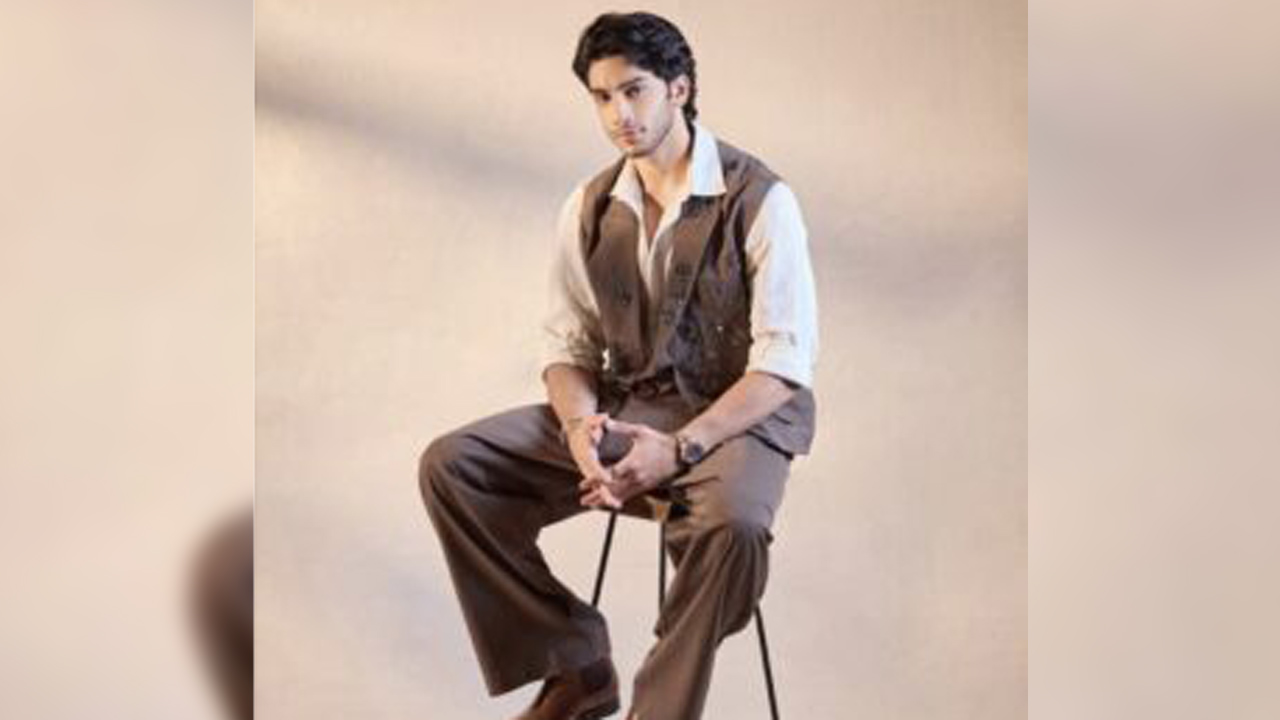
Interview: Vedang Raina: My Ambition Is To Keep Improving With Every Project!
 After making a striking debut as Reggie Mantle in The Archies, the musical coming-of-age drama directed by Zoya Akhtar, Vedang Raina quickly established himself as one of the industry’s most promising young talents. He followed it up with a notable role in Jigra, sharing screen space with Alia Bhatt. Now, the actor is set to be seen in Main Vaapas Aaunga, an emotional romantic drama helmed by acclaimed filmmaker Imtiaz Ali. In an exclusive conversation with Senior Editor Keerti Kadam, Vedang opens up about landing the project, working with A.R. Rahman, portraying a Partition-era character, and his evolving journey as an actor.
Q: How did Main Vaapas Aaunga come your way?
Vedang Raina: It all started with what I assumed would be a routine industry meeting with Imtiaz sir. Actors often meet directors and producers without any specific project being discussed; it’s usually a way of getting acquainted and understanding whether there might be a creative fit in the future.
What surprised me was the length of the conversation. Most such meetings wrap up within ten or fifteen minutes, but this one went on for over an hour. We spoke about Kashmir, music, art, culture, and life in general. Interestingly, there was no mention of a film. I walked away thinking that he was one of the most fascinating people I had ever met.
Several months later, I met him again. By then I hoped there might be a role somewhere in the picture, but he still didn’t approach it conventionally. Instead of presenting a script, he narrated situations and story ideas while observing my reactions. The screenplay wasn’t complete at the time. He only had a broad narrative and a few scenes worked out. The moment I realised he was considering me for the film, I immediately agreed. There wasn’t even a finished script to read, but my trust in him was enough. If Imtiaz Ali felt I belonged in his story, that was all the assurance I needed.
Q: As a representative of Gen Z, what kind of impact would you like to have through your work?
Vedang Raina: I don’t think in terms of influencing an entire generation. My first responsibility is to choose roles that genuinely excite me. If I don’t feel challenged or inspired by a character, I know I won’t be able to give my best performance.
What I want is to keep experimenting with different kinds of roles and continue growing as an actor. Beyond that, it’s difficult to gauge how people truly perceive you today. Social media creates so much noise that it’s often impossible to distinguish genuine appreciation from publicity-driven narratives.
Even when I see positive reactions to our work, I sometimes wonder how much of it reflects real audience sentiment. Everything feels amplified online. So rather than focusing on my impact, I prefer concentrating on the work itself and trusting that sincere effort will eventually connect with people.
Q: Do you believe you’ve earned a place among the industry’s respected young actors?
Vedang Raina: I would like to reach that stage one day, but I don’t think it’s for me to decide.
To be honest, fame has never been my primary motivation. Financial security has always felt more important because that’s something I haven’t always had. More than popularity, I want filmmakers and audiences to see me as a dependable actor.
My ambition is simple: to keep improving with every project. If people eventually say that I am committed, hardworking, and capable of delivering a strong performance, I will consider that a far greater achievement than fame itself.
Q: Since this is a period film, how did you prepare for your character?
Vedang Raina: In many ways, Keeno is the most different character I’ve ever played. He couldn’t be further removed from my own personality.
He’s a young Sikh man who is shy, reserved, and socially awkward. He’s not someone who can confidently express his emotions, especially around women. In his own mind, he thinks he’s charming and composed, but the reality is quite the opposite—he becomes nervous and flustered very easily.
That contrast fascinated me. Instead of approaching the role with preconceived ideas, I decided to surrender completely to Imtiaz sir’s vision. I arrived on set without any agenda of trying to appear heroic or glamorous because the character didn’t require that.
I treated myself like a blank canvas and absorbed whatever guidance he offered. My only goal was to faithfully execute his interpretation of the character. If I have managed to do that, I feel I’ve succeeded.
Q: You have often spoken about your love for music. What was it like working with A.R. Rahman?
Vedang Raina: Honestly, when you’re working with A.R. Rahman, there’s no question of trying to “vibe” with him—he’s A.R. Rahman.
The opportunity itself felt surreal. He wasn’t physically present during the recording sessions because he was travelling, while I was recording from Mumbai. Most of our interactions happened virtually through FaceTime.
Even those brief conversations meant a lot to me. For anyone who loves singing, the chance to record for Rahman sir is a dream. I remember being incredibly nervous whenever I spoke to him. My biggest hope was simply that he would like my voice enough to keep it in the film. Thankfully, that worked out, and I couldn’t be more grateful.
Q: The film deals with Partition and displacement. Which scenes affected you the most emotionally?
Vedang Raina: The Partition sequences were undoubtedly the most difficult.
Before preparing for the role, I had only heard stories from family members and older generations. But visiting the Partition Museum in Amritsar changed everything. Reading personal testimonies, seeing photographs, and learning about the experiences of people who lived through that period made the history feel painfully real.
One particular sequence connected deeply with me. There’s a song in the film called Woh Nahi, which follows my character’s emotional transformation. Initially, he is carefree, deeply in love, and completely attached to his home and community. Then everything is taken away from him.
At one point, he cries out, “I will come back,” addressing not only the woman he loves but also the homeland he is being forced to leave behind. Losing that sense of belonging changes him forever. Portraying that emotional evolution was challenging but immensely rewarding. Much of the credit goes to Imtiaz sir, who helped shape and guide every aspect of that journey.
Q: How would you describe your friendship with Sharvari off-screen?
Vedang Raina: Sharvari and I developed a wonderful friendship during the making of the film, and I think that comfort translated naturally into our performances.
We spent a lot of time discussing the screenplay, analysing scenes, and understanding our characters. Both of us approach our work in a similar way—we enjoy breaking down scripts, making notes, and exploring details.
Whenever we had free time, we’d sit together and rehearse. In fact, we were so eager to discuss scenes with Imtiaz sir that we sometimes joked about tossing a coin to decide who would call him first and ask if he was available for a reading session.
Imtiaz sir told us it was probably the first time actors had actively requested rehearsals from him instead of the other way around. We considered that a compliment.
Outside of work, we also enjoyed exploring Punjab together, sampling local food, eating kulchas, drinking lassi, and simply soaking in the atmosphere. It turned into a memorable experience both professionally and personally.
By Keerti Kadam