

Review: ‘Tujhya Aaila’: When Words Become Weapons!
In Marathi society, abuses invoking one’s mother, sister or other family members have, over time, become an almost casual part of everyday language. Often used without a second thought, these words are dismissed as harmless expressions of anger, frustration, friendship or bravado. But what happens when we pause to examine what lies beneath them? What do these words mean to the person on the receiving end, and why have we normalised language that can carry such deep emotional and cultural implications? Two-time National Award-winning filmmaker Sujay S. Dahake’s Tujhya Aaila takes this seemingly ordinary aspect of social behaviour and turns it into the central subject of a sharply observed and thought-provoking drama.
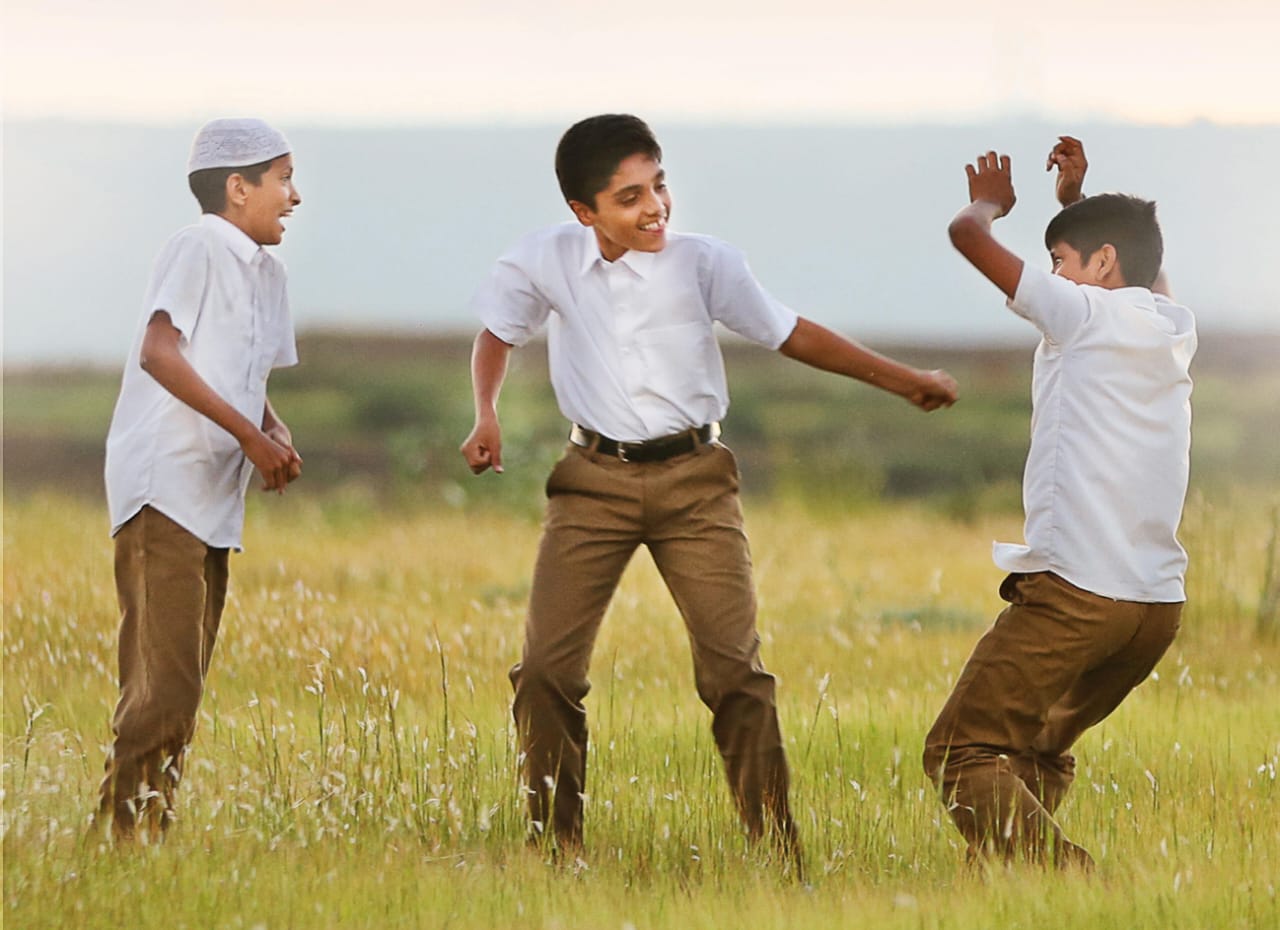
The film follows Avinash Deshpande (Soham Babar), a city-bred boy who moves with his family to a remote village near Satara. At his new school, Avinash encounters a peculiar local ritual of verbal sparring, where students use abusive language as part of a competitive game. What initially appears to be harmless fun gradually becomes a clash of egos, exposing the emotional consequences of words that are routinely used without considering their meaning or impact. Through Avinash’s experiences, the film introduces us to a fascinating set of characters, including his parents Arun Deshpande (Abhijit Thite) and Asmita Deshpande (Rajshri Deshpande), his grandmother (Rohini Hattangadi), school teacher (Sambhaji Bagat), Dattaji (Pramod Pawar), Bhamabai (Anuya Kalaskar-Baiche), Chand (Jaid Shaikh), Devya (Hrishikesh Wankhede), Khandya (Abhishek Zhende), Vetal/Khandya’s father (Janardan Kadam) and Narya (Malhar Dandage). The performances give the rural setting an organic quality, while Soham Babar effectively anchors the narrative through Avinash’s journey of discovery and confrontation.
At just 1 hour and 24 minutes, Tujhya Aailaremains remarkably focused. Niyaz Mujawar’s screenplay does not over-explain its central idea; instead, it allows the characters and situations to gradually reveal the social and emotional layers behind the language. The dialogues are particularly significant because the film’s subject demands authenticity without turning the abusive language into mere shock value. Sujay Dahake’s direction maintains this delicate balance, transforming a seemingly simple schoolyard ritual into a larger commentary on social conditioning, ego and the power of words. Vijay Mishra’s cinematography captures the textures of rural Maharashtra with an observational quality, while Aashya Gatade’s editing keeps the narrative crisp and purposeful. Saket Kanetkar’s background score and Varun Likhate’s music complement the film without overpowering its central theme.
What makes Tujhya Aaila stand out is the courage to build an entire drama around something that many people encounter every day but rarely stop to question. Dahake does not simply tell us that words can hurt; he makes us look at why certain words have become normalised in the first place. The film’s strength lies in turning a familiar social habit into an uncomfortable yet engaging cinematic conversation.
Tujhya Aaila is ultimately less about abuses and more about the meaning we attach to words—and the responsibility that comes with using them.
Rating: ***1/2