

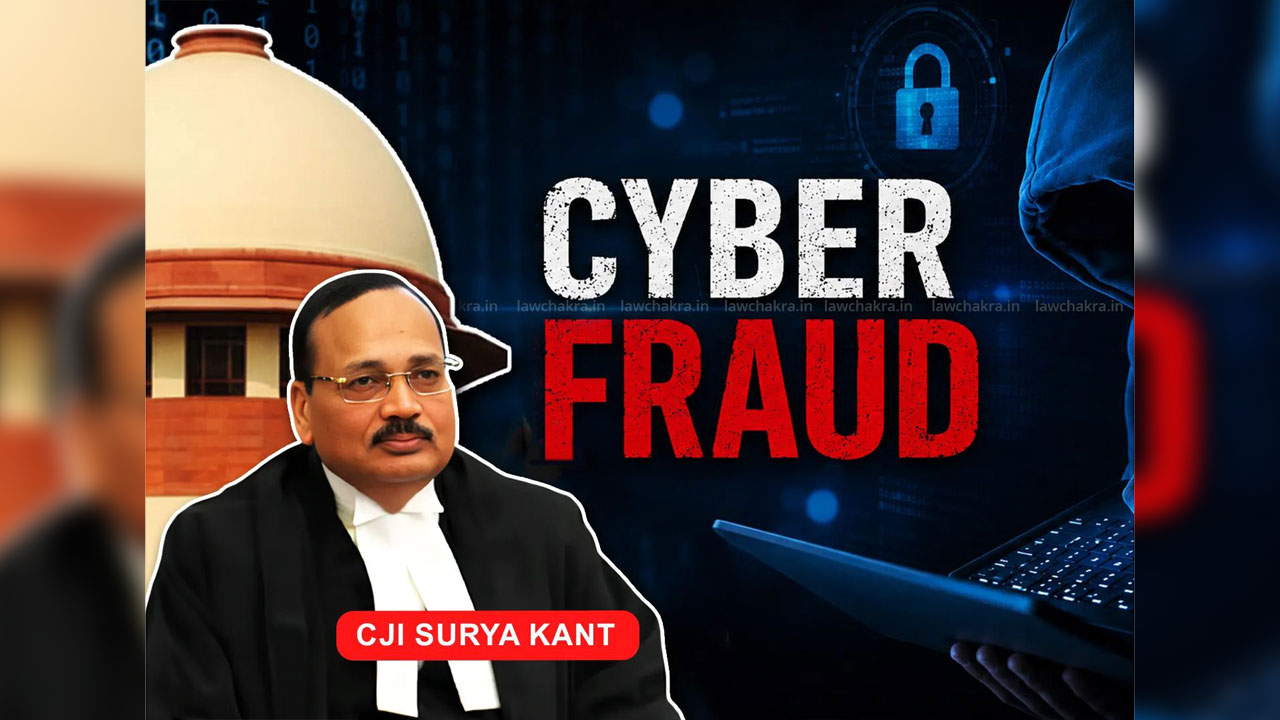
Cyber Fraudsters Are Parasites to Society: CJI Surya Kant’s Strong Warning to Cyber Criminals!
Cyber Criminals Are ‘Parasites’: Supreme Court Sends Strong Message Against Cyber Fraud.
By Ronnie Rodrigues
New Delhi: In a significant observation highlighting the growing menace of cyber crime in India, the Supreme Court has described cyber fraudsters as “parasites” who prey upon innocent citizens and siphon off crores of rupees through phishing links, fake banking portals, and other online scams.
Refusing to grant bail to an accused allegedly involved in a cyber fraud racket exceeding ₹3 crore, a Bench comprising Chief Justice of India Surya Kant, Justice Sudhanshu Dhulia, and Justice Sandeep Mehta underscored the need for a stringent approach towards cyber criminals whose activities affect victims across the country.
While dismissing the bail plea, the Bench observed that cyber frauds are not confined to a single State or region but have nationwide repercussions.
Addressing the accused’s counsel during the hearing, #ChiefJusticeSuryaKant remarked:
“You guys (cyber fraudsters) are parasites”
who dupe investors of crores of rupees.
“With cybercriminals, we have to be very harsh”.
Your victims are always pan-Indians.
You cheat someone in Tamil Nadu,
and then you go to Jammu.
Society’s interest is only that you should be inside jail.
The Court observed that the accused allegedly exploited technological platforms and digital banking systems to commit offences that undermine public trust in online financial transactions and digital payment ecosystems.
According to the prosecution, the fraud involved the use of fake banking portals, phishing links, mule bank accounts, and SIM cards allegedly procured using forged documents. Investigators further claimed that the operation was part of a structured interstate network engaged in systematic laundering of fraudulently obtained funds.
The petitioner sought bail on grounds of prolonged incarceration and parity with a co-accused who had previously been granted bail by the High Court. However, the Delhi Police strongly opposed the application, contending that the accused was the mastermind behind the racket and had allegedly remained absconding for several months before his arrest.
Taking note of the investigation findings, the Bench observed that the allegations disclose a well-organised criminal enterprise involving multiple layers of deception and financial manipulation.
The Court further remarked:
“Economic offences like these are premeditated
and cause deep harm to society.
They stand on a different footing from other crimes.”
Rejecting the contention that delay in trial should justify release on bail, the Supreme Court held that the gravity of the allegations and the wider societal impact of cyber fraud outweighed such considerations. At the same time, the Court directed the trial court to expedite the proceedings and endeavour to conclude the trial within one year.
The ruling sends a strong message against cyber crime and reinforces the judiciary’s growing concern over the rise of sophisticated online frauds that target unsuspecting citizens across India.