

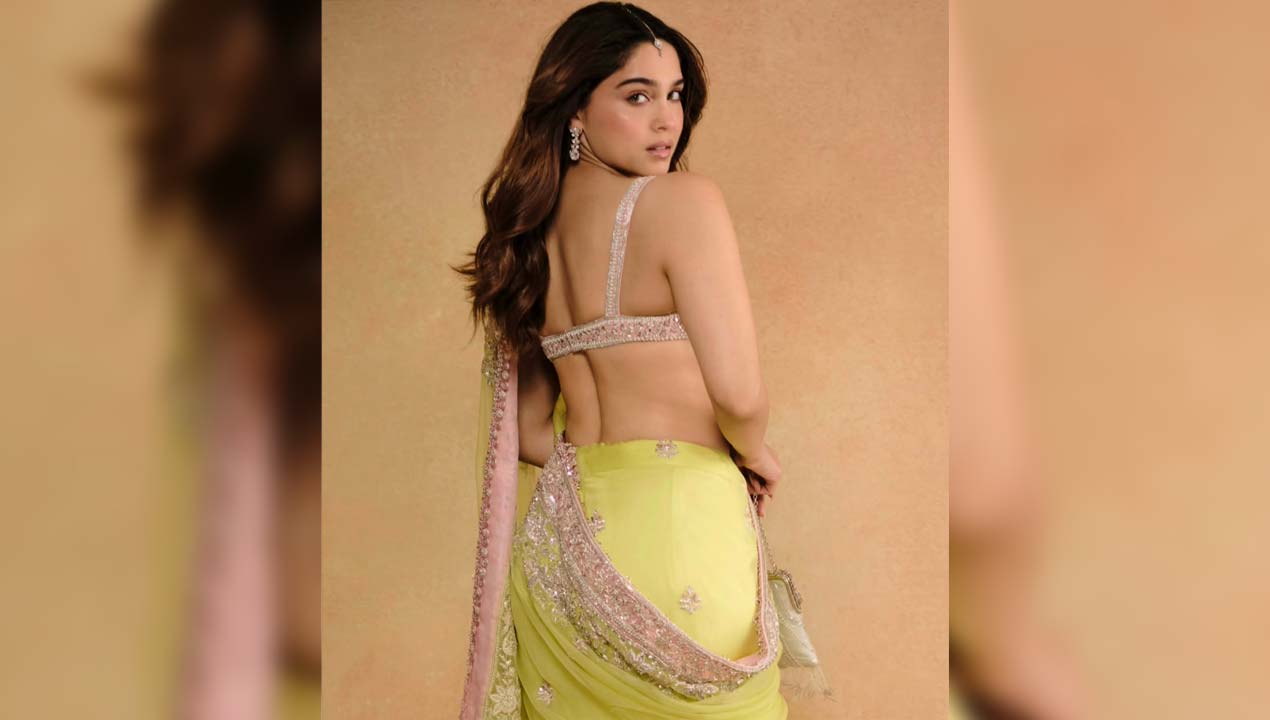
Interview: Sharvari Wagh: I enjoy working with filmmakers who challenge me and give me opportunities to learn something new!
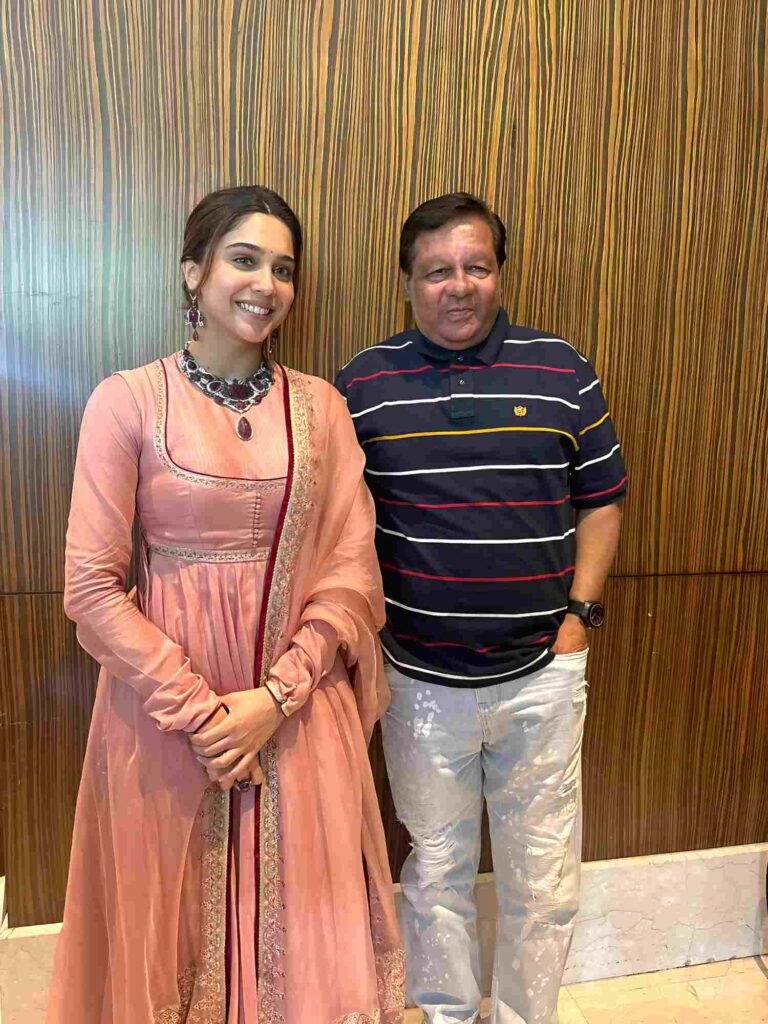 Sharvari Wagh, the talented Marathi actress who has steadily made her mark in Hindi cinema, is enjoying an exciting phase of her career. After making her debut with Bunty Aur Babli 2, she won appreciation for her performances in Munjya, Maharaj and Vedaa. She is now gearing up for her third release of the year, after Main Wapas Aaunga and Alpha, Yeh Prem Mol Liya, which also marks her first collaboration with Sooraj Barjatya and the iconic Rajshri Productions. Playing Purva Solanki, Sharvari gets an opportunity to explore the world of family relationships, Indian traditions and changing social expectations. In an exclusive conversation with our Sr editor Keerti Kadam, the actress discusses her memorable first meeting with Sooraj Barjatya, the values she shares with her character, her childhood aspirations, the influence of her family and her determination to create an identity of her own.
CineBuster: Your association with Rajshri Productions is a significant milestone so early in your career. How did Sooraj Barjatya approach you for the film, and what was going through your mind when you realised he wanted you to play Purva?
Sharvari: It was quite an unexpected and beautiful experience. I knew Sooraj ji was developing a film, but I had absolutely no idea that he was considering me for a role. I had never met him before and genuinely wanted to interact with him, so I requested a meeting. I had even rehearsed the conversation in my mind, thinking about what I should ask him and how I should present myself.
But he made me feel so comfortable that none of my preparations were needed! He casually mentioned that he had watched my films and liked my performances. He then said that he wanted to narrate a story to me. That was when I realised he had already noticed my work and was considering me for his film. He did not even ask me to audition. Within an hour of meeting me, he expressed his interest in narrating the subject. That confidence he showed in my abilities was extremely special.
Being part of Rajshri Productions is an honour because its films have created some of the most memorable characters in Indian cinema. On our first day, we shot the opening sequence of the song *Yeh Prem Mol Liya* at a temple, with Ayushmann and me entering together. I remember spending nearly two to three hours getting ready in a saree, with bangles, mehendi and specially styled hair. I am usually quite quick when it comes to getting ready, so I wondered whether this elaborate routine would continue throughout the shoot! (Laughs)
CineBuster: Purva is a woman who shoulders considerable family responsibilities. What attracted you to her personality, and how much of your own experiences could you bring into the character?
Sharvari: Purva is perhaps the character with whom I have developed the strongest emotional connection so far. She belongs to a family of six women and takes care of everyone, not just financially but also emotionally and physically. Whenever someone faces a problem or falls ill, she is the person they turn to. Her responsibilities are so extensive that she hardly gets an opportunity to think about her own happiness or romantic life.
Then a young man enters her world. He is willing to accept her responsibilities and adjust to her circumstances. All he expects is companionship and love. The story beautifully explores how two individuals and their respective families come together.
I relate to Purva because I have seen how much parents invest in their children’s lives. My parents have worked extremely hard to provide me with the best education, acting workshops and opportunities to pursue my ambitions. I understand the sacrifices that go into raising a child and supporting their dreams. Therefore, I strongly believe marriage should not automatically mean giving up one’s responsibilities towards one’s parents.
The film raises an important question about established family traditions, particularly the expectation that a woman must leave her parental home after marriage. It encourages people to look at relationships with greater understanding. At the same time, it remains a complete family entertainer, with plenty of humour and entertaining interactions between the characters. Even small disagreements over food preferences, such as how stuffed bhindi should be prepared, become amusing moments! (Laughs)
CineBuster: Sooraj Barjatya wanted you to bring a strong Indian sensibility to your character. How do you interpret this Indianness, and what was it like to be presented in such a traditional avatar?
Sharvari: For me, Indianness goes much deeper than wearing a saree or traditional jewellery. It is reflected in our upbringing, our relationships, our respect for elders and the values we carry within ourselves. Family has always occupied a special place in Indian society, and that emotional connection is something I strongly identify with.
I have always felt that Indian women look particularly graceful in traditional attire. There is an inherent elegance in the way we carry ourselves, communicate and express emotions. I was therefore excited to explore this side of my personality through Purva.
Working with Sooraj ji was also an opportunity to learn something new. I believe every filmmaker has a distinct vision, and as actors, we must remain open to acquiring new skills and unlearning certain habits. The director is ultimately responsible for shaping the film, while we actors become the medium through which the story reaches the audience.
I have worked in different cinematic spaces, including with Yash Raj Films, and each experience has taught me something different. A character in an action film requires a completely different preparation from someone in a family drama. But emotions are universal. Whether a woman is strong, vulnerable, courageous or romantic, the challenge is to portray her honestly.
CineBuster: You are often being compared with Madhuri Dixit, particularly because of your association with Rajshri. Also, your family background is quite interesting, considering your grandfather was a former Chief Minister of Maharashtra. How did you eventually find your way into acting?
Sharvari :Being compared with Madhuri Dixit is undoubtedly flattering, but I don’t think comparisons are necessary. She is an institution in herself, and I have grown up watching her. Even during our childhood dance classes, every girl wanted to dance like Madhuri Dixit. Whenever someone performed particularly well, people would affectionately compare her with Madhuri Didi. So, having my name mentioned alongside hers is a huge compliment. However, I want to build my own identity and be recognised for the work I do.
As a child, I was actually quite a tomboy. My elder sister Kasturi and I had a funny Sunday ritual. She would dress up in a pink saree, while I would wear a Spider-Man costume! We would wash those clothes and repeat the same routine every week. (Laughs) I had no interest in sarees or jewellery back then. Gradually, I started borrowing my sister’s clothes and developed an interest in dressing up. Even today, I consult her about my outfits because I trust her fashion sense more than mine.
My grandfather was the only person in our family associated with politics. My father is a builder, my mother is an interior designer, and my sister studied architecture. I had initially considered pursuing architecture and could also have joined the family business. But I always loved films. I would enact movie scenes and dance whenever I returned home. My parents enrolled me in dance classes, and I participated in Marathi theatre workshops during summer vacations. Since I grew up in Shivaji Park, I would enthusiastically take part in various activities organised there.
Acting was not initially a clearly defined career plan, but my parents recognised my passion. They never discouraged me from pursuing it and gave me the freedom and confidence to follow my dreams. Their support has been invaluable.
CineBuster: The greatest achievement you have spoken about is seeing your parents feel proud of you. How important is their approval in your life, and what does feminism and equality mean to you personally?
Sharvari: Honestly, whenever my parents speak about me with happiness and pride, I feel that I have achieved something meaningful. Working with Rajshri Productions is a wonderful professional milestone because the banner has always stood for strong storytelling and meaningful cinema. Its legacy is built on films that audiences have cherished across generations. Naturally, being associated with such an institution is special for any actor. But beyond professional recognition, nothing compares to the happiness I see on my parents’ faces. That is my biggest reward.
As far as feminism is concerned, I believe it begins with giving every woman the freedom to make her own choices. She should be able to pursue her ambitions, decide what she wants from life and receive the support of the people around her. Her decisions should be respected rather than questioned simply because she is a woman.
The subject of our film is also about understanding different people’s circumstances. Although the narrative explores a woman’s perspective, responsibilities and limitations are not exclusive to one gender. Every individual has personal situations that deserve consideration. We are not attempting to dictate how people should conduct their lives. Instead, the film encourages audiences to reconsider certain conventions that have been followed for generations. I hope it initiates a healthy conversation about equality within families.
CineBuster: You have portrayed very different characters in films such as Munjya, Maharaj, Vedaa, Main Wapas Aaunga and Alpha. With Yeh Prem Mol Liya completing an interesting year for you, what are your expectations, and what would you like audiences to remember about your journey?
Sharvari: Every film has allowed me to discover a different side of myself, and that is what makes acting exciting. I don’t want to restrict myself to a particular image or genre. I enjoy working with filmmakers who challenge me and give me opportunities to learn something new.
With Yeh Prem Mol Liya, I am particularly excited because Purva is emotionally very close to me. She represents women who quietly shoulder responsibilities and often put their own aspirations aside for the happiness of their families. Through her, I hope audiences appreciate the importance of acknowledging women’s choices and understanding their responsibilities towards their parents.
I also feel fortunate to have worked with such diverse teams and experienced different filmmaking styles at this stage of my career. Every project teaches me something, whether it is about performance, preparation or understanding human emotions.
Ultimately, I want my work to speak for itself. I hope to continue experimenting, take up challenging characters and grow as an actor with every film. But whenever I look back at my journey, I know that my greatest satisfaction will always come from seeing my parents happy and knowing that they are proud of the person I have become.
By Keerti Kadam