

Review: You Can See Everything: When Emotions Overshadow Facts, Truth Becomes Frightening!
For three hours, Nathan Fielder opts not to quiz convicted criminal Elizabeth Holmes on the details of her deception. Instead, he looks into her eyes and asks if she’s for real. Is that why his film has been so successful? *You Can See Everything* takes an unconventional approach to documentary filmmaking, exploring the thin line between truth, perception and emotional conviction. Rather than relying entirely on established facts and evidence, it draws viewers into an unsettling psychological exercise where expressions, reactions and feelings become central to understanding a person. In an age when emotional narratives often matter more than objective reality, the film captures the pulse of contemporary society. However, its greatest achievement is also its most disturbing aspect.
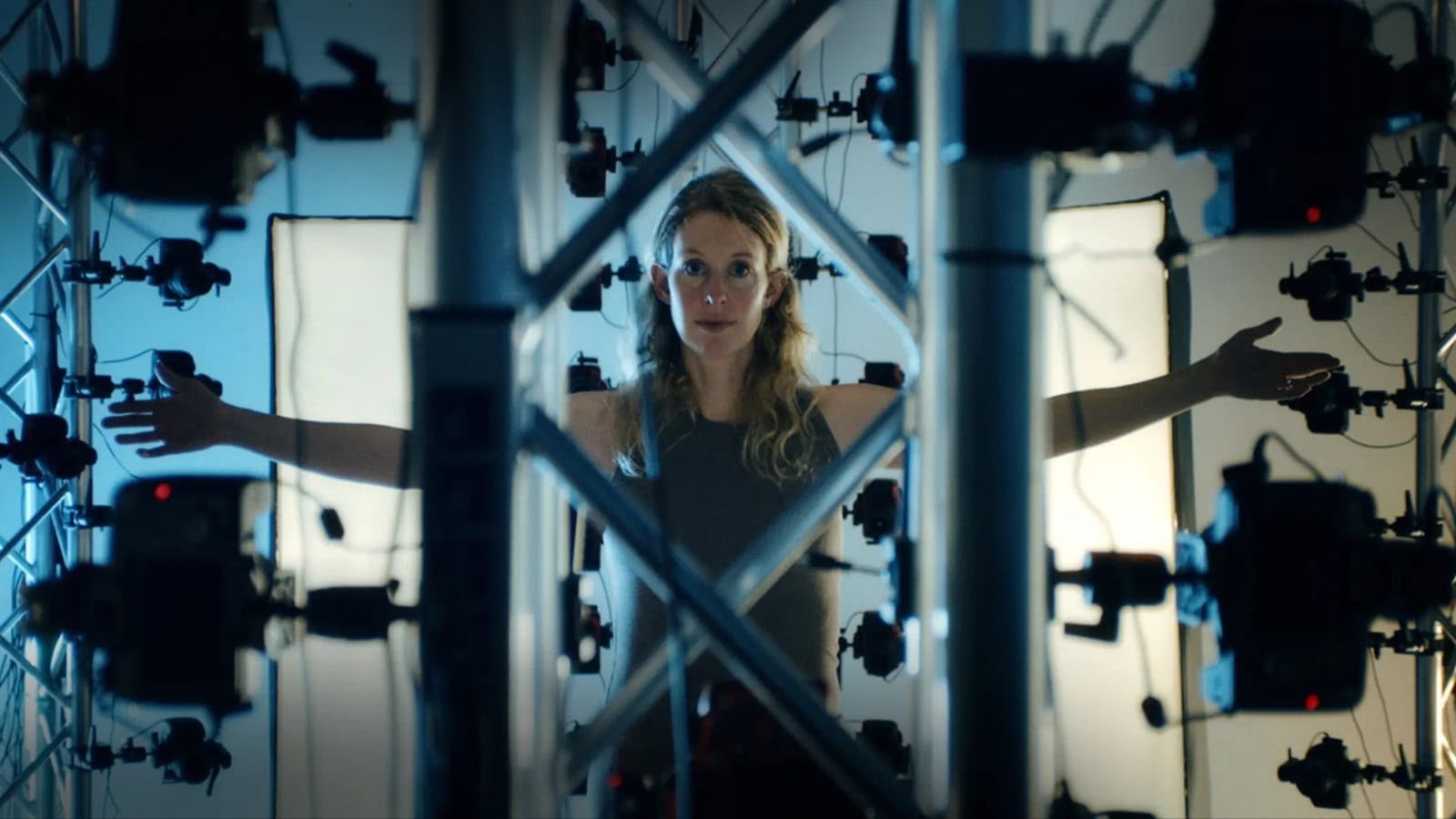
The documentary follows Elizabeth Holmes, the disgraced founder of Theranos, who was convicted of defrauding investors and sentenced to 11 years in prison. Thirty-four days before reporting to prison, Holmes, along with her partner Billy Evans, invites filmmakers Nathan Fielder and Lance Oppenheim into their lives, offering unprecedented access to their home and personal conversations. What begins as an attempt to document her final days of freedom gradually develops into a complicated game of questions, doubts and psychological confrontations. Nathan Fielder appears as himself, while Elizabeth Holmes and Billy Evans become the central subjects. Amanda Seyfried, who previously portrayed Holmes in *The Dropout*, adds another fascinating dimension to the narrative through dramatic recreations, while Christopher Abbott also features as Billy Evans in the reenactments.
The screenplay is cleverly constructed, constantly challenging the audience’s understanding of what is real and what is being performed. The dialogues and seemingly ordinary conversations carry layers of discomfort, irony and dark humour. Nathan Fielder’s direction, alongside Lance Oppenheim, is remarkably unconventional, allowing awkward silences and subtle expressions to communicate more than elaborate explanations. The performances, particularly Holmes’s intriguing on-camera presence and Seyfried’s impressive portrayal, keep the narrative engaging. David Bolen’s cinematography captures the intimate atmosphere, while Adam Locke-Norton’s editing maintains the film’s unpredictable rhythm. Though its nearly three-hour runtime demands patience, *You Can See Everything* is an audacious, thought-provoking documentary that stays with you long after the credits roll. It is fascinating, disturbing and, ultimately, a reflection of how easily feelings can overshadow facts.
Rating: ***1/2
By Keerti Kadam