

Review: Batwara 1947: A Powerful Message That Struggles to Rise Above It’s Dated Storytelling!
Partition has been one of the most painful chapters in the history of the Indian subcontinent, and filmmakers have repeatedly returned to it through films such as Garam Hava, Pinjar, Earth, Train to Pakistan and 1947: Earth, each exploring the human cost of a political division. Batwara 1947, which began its journey as Lahore 1947, arrives at a particularly sensitive moment, when India and Pakistan continue to remain divided by political hostility and violence. The film inevitably raises a larger question: can the two countries ever move beyond their troubled past and become friends?
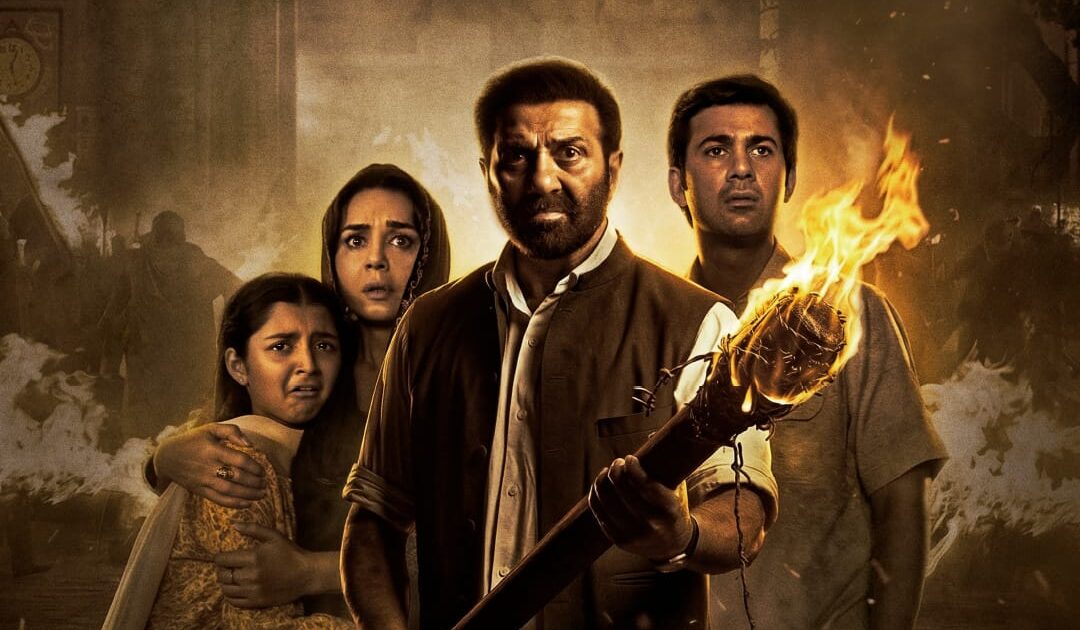
The film is based on Asghar Wajahat’s celebrated 1989 play Jis Lahore Nai Vekhya Vo Jamya Ei Nai, one of the most humane accounts of Partition. The story unfolds in Lahore, where the Mirza family, Sikandar (Sunny Deol), his wife Hamida (Preity Zinta), their son (Karan Deol) and young daughter (Khhushi Hajare) arrives after their home is destroyed by rioters and they are allotted a haveli left behind by a Hindu family. But the house is still occupied by Durgawati, or Mai (Shabana Azmi), an elderly Hindu woman who refuses to leave because she is waiting for her son and his family to return home. Nobody has the courage to tell her that they have perished in the riots. The resulting conflict inside the haveli becomes a reflection of the larger conflict outside it. Matters are further aggravated by a communal troublemaker, played by Abhimanyu Singh, who openly threatens the remaining Hindus and objects to their puja and Diwali celebrations.
The greatest strength of Batwara 1947 is its source material, because Wajahat’s play carries an inherently powerful argument against communal hatred. The film retains the central ideas—no religion is inherently evil, hatred can be defeated by love, religion should not be mixed with politics, and humanity is the greatest religion. However, the writing and treatment often turn these ideas into direct statements rather than allowing them to emerge organically from the characters and situations. The dialogue frequently feels stage-bound and predictable, with the good and bad representatives of both communities neatly positioned on either side. Director Rajkumar Santoshii manages some effective moments, particularly in the scenes involving Mai and the Mirza family, but the film needed a more contemporary cinematic treatment to match the timelessness of its source.
Sunny Deol brings his familiar intensity and still has the ability to make his roar work, while Preity Zinta delivers a sincere performance. Karan Deol is effective in his part, and Abhimanyu Singh convincingly embodies the menace of communal extremism. Child artist Khhushi Hajare too delivers a good performance. But it is Shabana Azmi who owns the film. As Mai, she finds the precise balance between theatricality and melodrama, giving the character dignity, vulnerability and emotional strength. Batwara 1947 has an important message and a remarkable foundation, but instead of making us feel the pain and absurdity of Partition, it too often tells us what we are supposed to feel.
Rating: ***
By Keerti Kadam