


Interview: Mahima Makwana: ‘Television Made Me Who I Am, But I Always Dreamt of the Big Screen’!
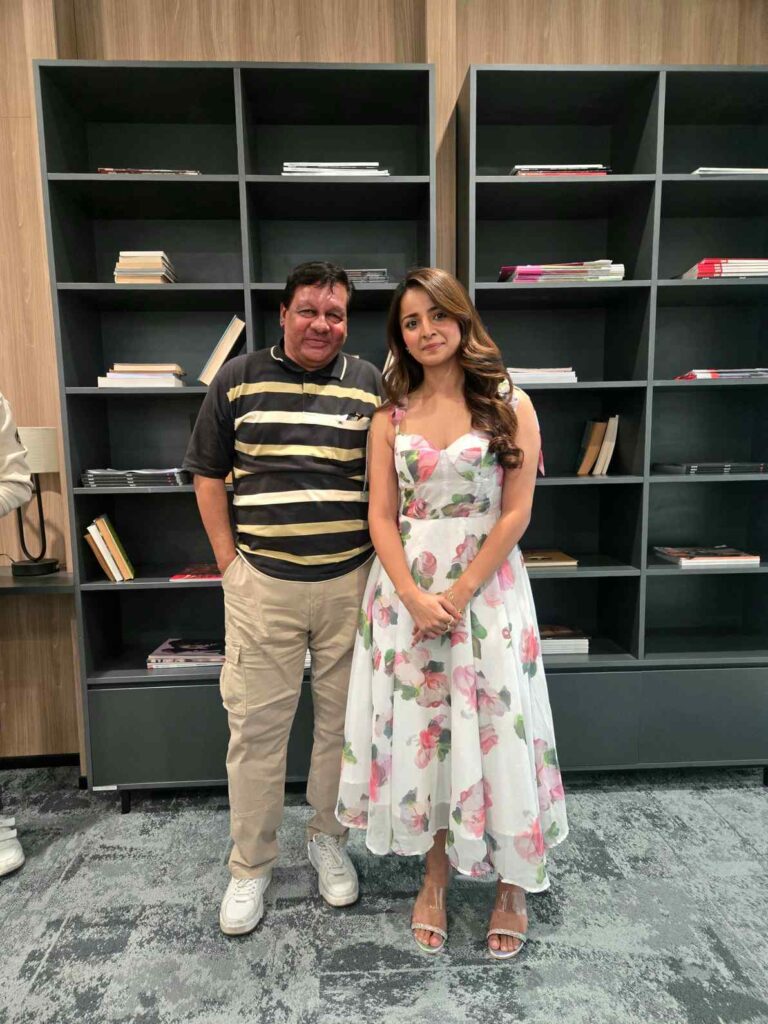 Mahima Makwana has steadily carved a niche for herself as one of the most versatile performers of her generation, seamlessly transitioning from television to films and OTT. She first became a household name with the popular television show Sapne Suhane Ladakpan Ke, before strengthening her acting credentials with acclaimed shows such as Balika Vadhu, Rishton Ka Chakravyuh, Shubharambh and Dil Ki Baatein Dil Hi Jaane. Determined to explore diverse roles, she successfully made the leap to films with Salman Khan’s Antim: The Final Truth, followed by performances in Tumse Na Ho Payega and Showtime. Her latest outing, the Netflix romantic drama Musafir Cafe, sees her exploring a layered and emotionally nuanced character. In an exclusive conversation with out Sr Editor Keerti Kadam, Mahima opens up about her journey from television to films, the challenges of waiting for the right opportunities, working with Vikrant Massey, and why she believes romance deserves a strong comeback on screen.
CB: After projects like ShowTime, Antim and Tumse Na Ho Payega, what made Musafir Cafe the right choice for you?
Mahima: I was waiting for something that felt genuinely different. Every project teaches you something new, but after ShowTime, I wanted to challenge myself with a completely different space. Musafir Cafe offered exactly that. The script immediately resonated with me, and I knew it was the opportunity I had been waiting for.
CB: The waiting period between projects can be difficult for actors. How did you deal with it?
Mahima: Waiting is probably the toughest part of an actor’s life. Being on a film set is actually the easiest because that’s where I feel most alive. During those two years, I was working, but some projects simply didn’t release. Instead of getting frustrated, I used that time to travel, understand myself better and realise that life is much bigger than work. Many things are beyond our control, so you learn to accept that.
CB: Television gave you your first break and immense popularity. How do you look back at that phase?
Mahima: I will always be grateful to television because it gave me my identity. Even today, people recognise me as Rachna from Sapne Suhane. Sometimes we underestimate television’s reach, but the love it gives lasts for years. It made me a household name and laid the foundation of my career.
CB: How was your off-screen bond with Vedika Pinto? Were there ever any insecurities or competition?
Mahima: We bonded more off-screen than on-screen. I don’t think such issues are about gender; they depend on the individual. If you’re secure in yourself, there is no room for unnecessary competition. We respected each other from day one, and that positive environment reflected in our performances.
CB: How did Musafir Cafe come to you?
Mahima: I was shooting another film in a village when casting director Karan Mally called and simply said Netflix was making a love story. I auditioned without knowing much about the project. After the chemistry test with Vikrant Massey and reading the script, I knew this was exactly the kind of story I had been waiting to do.
CB: What was it like sharing screen space with Vikrant Massey?
Mahima: It’s a special story because I had met Vikrant years ago on the sets of Balika Vadhu. At a time when I was being scolded by a director as a child actor, he was one of the few people who treated me with kindness. Fifteen years later, we were working together. He’s an incredibly generous actor who never carries the weight of his achievements onto the set. Acting with him feels like a collaboration where both actors elevate each other.
CB: How did that friendship develop off-screen?
Mahima: We shared a very comfortable equation. You don’t always find good people in this industry, so when you do, you value them. There was mutual respect among everyone on the team—from our writer and director to Vedika and Vikrant—and that made the entire experience memorable.
CB: Since Musafir Cafe is based on a novel, did you read the book before shooting?
Mahima: No, I didn’t. It was a conscious decision because although the series is inspired by the novel, several elements have been adapted. For me, the script is my Bible. I wanted to stay completely faithful to what the writer had envisioned and avoid creating a different interpretation in my mind.
CB: What does love mean to you?
Mahima: Every generation defines love differently, but I still believe in old-school romance, commitment and marriage. For me, love is about finding a sense of home in another person. I respect everyone’s choices, but personally, I believe in meaningful, long-term relationships.
CB: Did Musafir Cafe work better as a web series than as a film?
Mahima: Absolutely. Some stories need time to breathe. The series format allows the audience to understand the characters, their emotions and motivations in much greater depth. That’s ultimately a creative decision made by the writer and filmmaker, and I believe it was the right one for this story.
CB: Romance has become a rare genre on OTT. Do you think audiences still crave it?
Mahima: Definitely. We’ve grown up watching love stories, and I think audiences still miss them. While thrillers and crime dramas are everywhere, there’s always room for stories that make you smile, cry and feel emotionally connected. That’s what makes Musafir Cafe special.
 CB: The performances in Musafir Cafe feel very organic. How collaborative was the creative process?
Mahima: Filmmaking is always collaborative. Our writer Sharanya gave us beautifully written characters but also encouraged us to bring our own experiences into them. When actors, writers and directors trust one another, the characters become more authentic. We were emotionally invested in these roles, and saying goodbye to them after the shoot was genuinely difficult.
CB: How important was Antim in your career?
Mahima: It was life-changing. My biggest dream—and my mother’s dream—was to see me on the big screen. I had auditioned for films while working in television, but it always seemed impossible. After Salman Khan noticed me during a Bigg Boss promotion, I auditioned and landed Antim. It changed the course of my career.
CB: Would you return to television?
Mahima: Every medium has contributed to my journey. Television gave me recognition, while films and OTT have allowed me to explore a wider range of characters. As an actor, I simply want to keep evolving and telling different stories, irrespective of the platform.
CB: Antim released during the pandemic and couldn’t realise its full box-office potential. Do you still hope to be part of a big commercial entertainer?
Mahima: Of course. But I’ve also learned that an actor can only control the work they do, not the outcome. Antim may not have achieved everything commercially, but it gave me the transition I had always dreamed of. For that, I’ll always remain grateful. Everything else will happen at the right time.
By Keerti Kadam